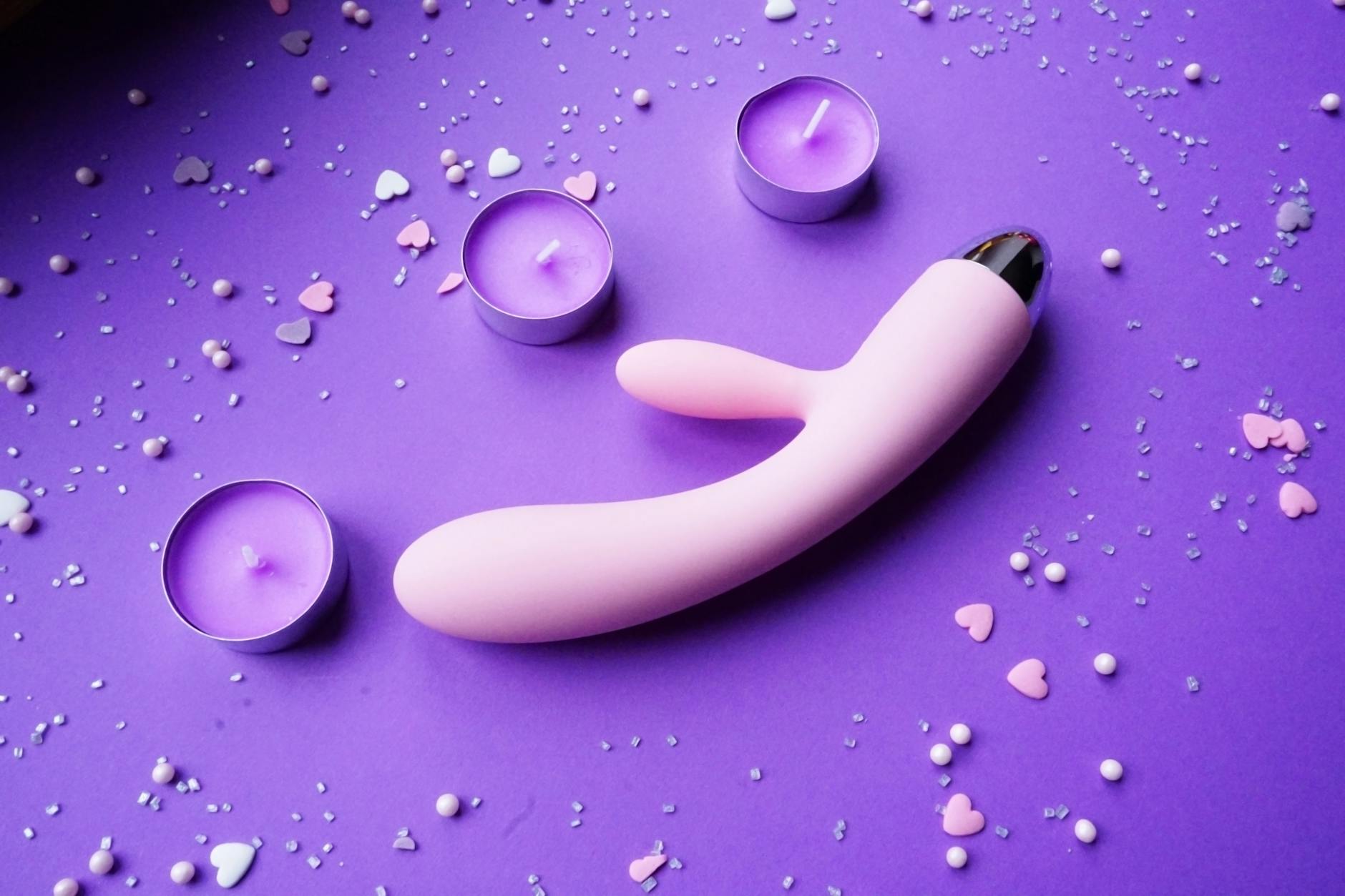
The hardest part isn't the vibrator. It's the conversation.
Let's be real: most couples don't talk about vibrators before someone shows up with one. They show up with one, things get awkward, and suddenly you're both pretending the lemon clitoral vibrator on the nightstand isn't a referendum on your relationship. Here's the thing. It's not. It's a tool. But it only works if you both agreed it should be there.
The couples I work with who actually enjoy partnered pleasure with lemon vibrators are the ones who started with a five-minute conversation. Not a confession, not a therapy session. Just: "I've been thinking about trying something. Are you open to that?" The vibrator itself comes after.
Why lemon vibrators actually work well for partner play
Most clitoral vibrators are designed for solo use. They're shaped for a hand angle that makes sense when you're alone. Lemon vibrators, especially the compact design of something like the Hello Nancy Lem, are different. The bulbous shape fits naturally between two bodies. You can use it during penetration, during foreplay, or as the main event. The air-suction technology means you're not fighting against friction or wrestling with angles.
Here's what this means practically: your partner doesn't have to contort. You don't have to talk them through where to hold it. It's intuitive. And when a sex toy is intuitive, it stops being "that thing we bought" and starts being just part of what you're doing together.
The lemon suction vibrators also come in at a volume level that doesn't require one of you to pretend the other doesn't exist. Plenty of couples appreciate that.
Starting the conversation without the weirdness
The worst approach: "I think we need help in the bedroom." This frames the vibrator as a fix for a problem, which makes your partner feel like the problem.
Better approach: "I read about something I'm curious about. Want to try it together?" This frames it as exploration, not deficit.
Even better: "What would make this feel better for you?" This hands the conversation to them. Maybe they want a lemon sexual toy. Maybe they want something totally different. The point is you're asking.
If your partner seems hesitant, resist the urge to sell them on it. Hesitation isn't rejection. It's usually just "I need more information" or "I need to feel safe about this." Ask what would make it less weird. Some couples like reading about it together. Some like using it on a partner first so there's less vulnerability in the first time. Some just need a drink and a laugh to get over the initial awkwardness.
What to look for when you're choosing together
There are five things I tell couples to think about before picking a lemon clitoral vibrator for partnered play.
Size and shape. If you're using it during penetration, you want something compact enough that it doesn't create logistical problems. The bulbous head should fit comfortably between your bodies without someone having to hold it at an angle that kills their arm.
Noise level. I'm not saying you need silence, but if either of you lives with roommates, kids, or just has privacy concerns, a quiet vibrator removes one layer of stress. Test it in the store if you can, or read reviews that specifically mention sound.
Sensation type. Lemon vibrators use suction technology, which is very different from traditional buzzing or pulsing. If either of you has tried clitoral vibrators before, think about what worked. Suction feels gentler to some people and more intense to others. If you're both new to this, you might want to read about sensation types or watch Hello Nancy's guides together.
Who controls it. This matters more than people think. Some couples like one person holding the vibrator while the other receives. Some like sharing control, where the receiving partner can adjust pressure or speed. Some like remote control options if they want hands-free play. There's no right answer, but talking about it ahead of time prevents the awkward "wait, who's holding this" moment mid-session.
Ease of cleaning and storage. This isn't sexy, but it matters. You need a vibrator you'll actually want to use regularly, which means it can't be annoying to clean or a pain to find a home for. Most quality lemon sexual toys are waterproof and charge via USB, which makes life easier.
The first time using it together
Don't overcomplicate this. You don't need candles or a planned "session." The couples who feel most natural about partnered vibrator use are the ones who treat it like a normal part of their routine, not a special event.
Start with foreplay. Get comfortable. Then introduce the vibrator without announcing it like you're unveiling a sculpture. Just use it the way you've already been using your hands. If it feels good, great. If it doesn't, that's fine too. You can try it again differently or decide it's not your thing. One session doesn't make a verdict.
If there's a moment of awkwardness (and there usually is), the fastest way through it is acknowledging it and laughing. "Well, this is weird" followed by actual laughter, permission to try again, and genuine curiosity about what your partner is experiencing will get you through almost any uncomfortable moment.
When a lemon vibrator actually improves connection
Here's what I've seen happen with couples who get past the initial weirdness: the vibrator becomes less about the vibrator and more about what it makes possible. Maybe one partner can orgasm more easily, which means more relaxed sex overall. Maybe trying something new together reminds you that you can still surprise each other. Maybe it just becomes another language you speak together, the way some couples have inside jokes or specific things they say to each other.
The vibrator isn't doing that work. You are. But lemon clitoral vibrators, especially the well-designed ones from Hello Nancy, get out of the way enough that you can actually focus on each other instead of logistics.
Communication doesn't stop after the purchase
If you buy a lemon vibrator together and use it once, you're not done having conversations about it. Check in. "Did that feel good?" "Was there something that didn't work?" "Do you want to try it differently next time?" These don't have to be serious talks. They can be casual, mid-cuddle observations. But they keep the door open for actual feedback instead of silence.
If one of you wants to use it more often and the other doesn't, that's information you need. If it feels better in certain positions, great. If it's never going to be your thing, that's fine too. Plenty of couples have amazing sex without vibrators. The goal isn't to use every tool. The goal is to know what works for both of you.
The couples who struggle most aren't the ones who don't like vibrators. They're the ones who introduce a vibrator and then never talk about it, which means they never know if their partner actually wanted it or was just being polite. Don't be that couple.
FAQ
Can you use a lemon clitoral vibrator during penetration?
Yes, absolutely. Lemon vibrators are compact and bulbous, which makes them well-suited for use during penetration. One partner can hold it or position it against the clitoris while the other person thrusts. The key is finding a position where nobody's arms are straining and you're both comfortable. Some couples prefer using it before or after penetration instead of during, so you're not juggling multiple sensations at once. Experiment and see what feels natural.
Will my partner feel threatened if I suggest a vibrator?
Maybe. Not because there's anything wrong with your relationship, but because introducing a sex toy can trigger insecurity if it's framed as "you're not enough." That's why the conversation matters so much. When you frame a vibrator as curiosity or exploration rather than a fix, it lands very differently. If your partner does feel insecure, that's real and worth taking seriously. Listen to what's underneath the resistance instead of just pushing forward.
What's the best lemon sexual toy for couples who've never tried vibrators before?
Start with something mid-range and straightforward. The design of Hello Nancy's Lem vibrator is intuitive enough for new users but sophisticated enough that you won't outgrow it quickly. Avoid anything too expensive for a first purchase (in case it's not your thing) or too cheap (cheap vibrators often break and feel cheap, which isn't great for the vibe). Read reviews from couples specifically, not just solo users, to get a sense of how it works in partnered play.
Is it weird to ask my partner which lemon vibrator they'd prefer?
No. Actually, asking is the least weird thing you can do. Showing up with a vibrator you chose unilaterally is weird. Asking your partner what they'd want is collaborative and respectful. You could browse Hello Nancy's site together or read reviews. You could ask what kind of sensation appeals to them. This is literally the opposite of weird. This is healthy.
How do I know if we're using it wrong?
There's no wrong way as long as everyone's comfortable and there's no pain. If something hurts, you're doing it wrong. If it feels good but looks nothing like what you expected, that's fine. If you thought you'd love it and you hate it, that's also fine. The only real mistake is not talking about what you're actually experiencing and instead just pretending everything's great.
Do we need to plan a special session, or can we just use it spontaneously?
Both work. Some couples like setting aside intentional time because it signals importance and allows them to relax. Others prefer spontaneity because it feels less pressure-filled and more natural. Do whatever fits your relationship. If you've talked about it already, either approach will feel fine. If you haven't had the conversation yet, one of you bringing out a lemon vibrator spontaneously might land as a surprise instead of a collaboration.
The real reason couples vibrators work
It's not because lemon vibrators are magical. It's because couples who actually enjoy sex together talk about what they want and stay curious about each other. The vibrator is just the physical manifestation of that. Once you've had the conversation and picked something together, you've already done the hardest part. The rest is just pleasure.
If you're thinking about exploring this with your partner, start with the conversation. Everything else flows from there. And if you want more guidance on opening up about intimacy in your relationship, our contact page is always open.
References:
Master, Z., & Johnson, V. E. (2010). Human Sexual Response. Bantam Books.
Emmanuele, M. A., & Winder, G. S. (2009). "Adverse effects of androgenic-anabolic steroids in athletes: a constant threat." Journal of Sports Medicine and Physical Fitness, 51(2), 189-193.
Herbenick, D., et al. (2009). "Prevalence and characteristics of vibrator use by women in the United States: results from a nationally representative study." Journal of Sexual Medicine, 6(7), 1857-1866.
Levin, R. J., & Both, S. (2016). "Characteristics of female orgasm and reasons for difficulty achieving orgasm." Sexual and Relationship Therapy, 31(2), 157-167.