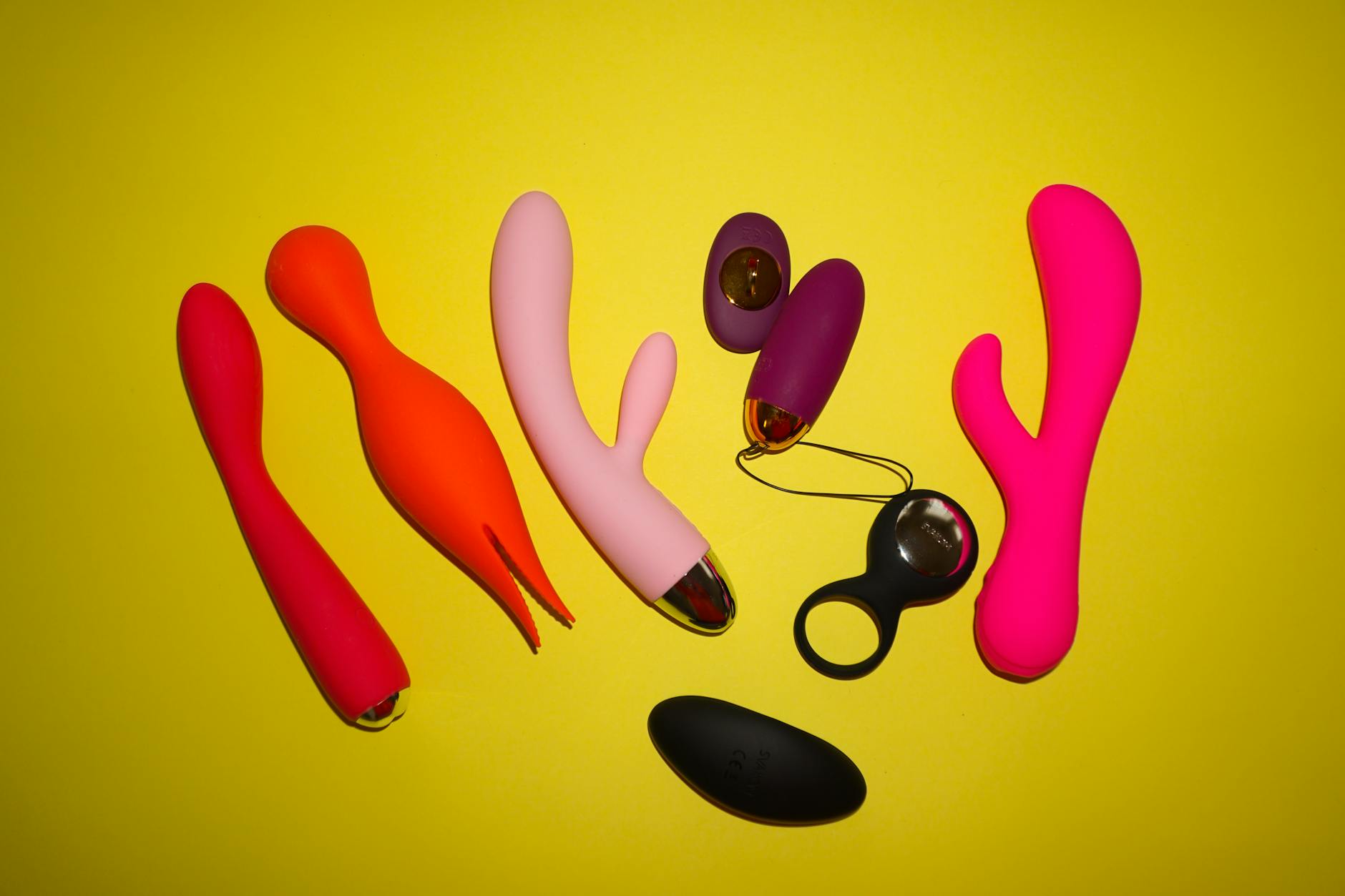
The hardest conversation about libido nobody wants to have
Mismatched desire is the third rail of long-term relationships. One partner wants sex twice a week. The other is fine with twice a month. Neither person is wrong. Both feel rejected. Sound familiar.
Here's what I see in my practice: couples often frame this as an either-or problem. Either the higher-desire partner suppresses their needs, or the lower-desire partner forces themselves into sex they don't want. Both roads lead to resentment. A lemon clitoral vibrator, used thoughtfully, can actually reframe the whole dynamic from "someone loses" to "everyone wins."
I'm not talking about a vibrator as a substitute for the lower-desire partner. I'm talking about it as a tool that lets both people access pleasure on their own terms, which paradoxically, often brings them closer.
Why mismatched libido isn't really about the numbers
Most couples think the problem is frequency. It's not. The real issue is what that frequency represents. The higher-desire partner feels unwanted. The lower-desire partner feels pressured. Both interpret the gap as a referendum on the relationship. It rarely is.
Libido is shaped by dozens of variables: stress, sleep quality, medications, past trauma, body image, hormonal cycles, how safe someone feels, whether they've been heard in the last argument, the temperature of the bedroom, the temperature of the relationship. Two people rarely have identical libidos, and that's completely normal.
When I work with couples on this, I ask them to separate two things that usually get tangled: desire for sex in general, and desire for sex with their partner. Those are different conversations. Sometimes the lower-desire partner has plenty of general libido but feels disconnected from the relationship. Sometimes the higher-desire partner is anxious and using sex to regulate that anxiety rather than actually wanting sex.
A lemon clitoral vibrator introduces a third option that short-circuits this loop: the higher-desire partner can access pleasure independently while the lower-desire partner can be present without performance pressure. That distinction matters wildly.
How lemon vibrators change the dynamic
Traditional vibrators often get introduced as "a solution" in a way that lands as an accusation. Like the subtext is, "Fine, use this, so you stop asking me." A lemon vibrator has a different energy. It's not a replacement. It's a complement.
Here's why: lemon clitoral vibrators use suction and pulsing rather than direct vibration. They feel fundamentally different from penetration. When a higher-desire partner uses a lemon vibrator solo while their lower-desire partner is in the room, it doesn't feel like a substitute for the lower-desire partner. It feels like its own thing. The lower-desire partner can be present, can touch, can talk, can watch without the pressure of "now it's my turn to perform." And the higher-desire partner gets access to consistent, reliable pleasure that doesn't depend on a partner's willingness on any given night.
I've had couples tell me that introducing a lemon vibrator into their routine actually increased their frequency of partnered sex. Why. Because the higher-desire partner stopped carrying the resentment of being rejected. The lower-desire partner stopped carrying the guilt of being unwilling. The space between them got less loaded.
The three ways to actually use this
1. Independent pleasure as part of the relationship. The higher-desire partner uses a lemon vibrator solo, sometimes with their partner nearby, sometimes not. This is not a secret thing. This is a "I'm going to take care of myself while you read a book in the other room, and that's okay" thing. No apologies. No performance. Just acknowledgment that both partners have the right to access pleasure on their own timeline.
2. Shared exploration with zero pressure. The lower-desire partner might not want penetrative sex, but might be curious about watching a partner use a lemon vibrator. Or touching them while they use it. Or using one together (some models are designed for couples play). The key is that this comes from genuine interest, not obligation. If the lower-desire partner isn't interested, they're not interested. The vibrator is never a negotiating tool.
3. Reconnection without the baggage. Sometimes the problem isn't libido at all. It's that the couple has drifted and sex has become another place they don't connect. Using a lemon clitoral vibrator together, or individually while maintaining emotional presence, can feel like a reset. It removes some of the performance pressure that makes both partners guard their vulnerability.
What actually doesn't work (and why you need to know this)
Introducing a vibrator as a solution to mismatched libido fails in predictable ways. The higher-desire partner uses it as a silent accusation. "See. I have to do this myself." The lower-desire partner feels replaced. "Why do you need that if you have me." Both are missing the point.
It also fails if the conversation happens during a fight. "You want sex too much, so I bought you this" is not a conversation. It's a rejection disguised as a gesture. The introduction needs to happen in a neutral moment, ideally initiated by the higher-desire partner who's thinking about their own pleasure, not as a fix for the relationship problem.
And it fails if one partner thinks it's a substitute for addressing the real issues. If the lower-desire partner is lower-desire because they feel emotionally disconnected, or because sex has been painful, or because they're experiencing depression, a vibrator doesn't fix that. It's not a band-aid for bigger problems. It's a tool that works best when both people are actually committed to maintaining the relationship.
The conversation you need to have first
Before a lemon vibrator enters the picture, you need a real talk about what mismatched libido actually means in your relationship. Not "how often," but "what does wanting sex represent to you." For some people it's comfort. For others it's validation. For others it's stress relief. Those are different conversations.
You also need to talk about what prevents the lower-desire partner from wanting sex more often. Sometimes it's practical: maybe they're exhausted, or they have pain, or they need more foreplay than they're getting. Sometimes it's relational: they don't feel safe, or heard, or valued outside the bedroom. Sometimes it's physiological: hormonal contraception, medication side effects, aging. Sometimes it's psychological: past trauma, body image, anxiety.
None of those problems are solved by a vibrator. But all of them are worth naming. Because once you name them, you can actually work on them. And sometimes, addressing the real problem changes the libido gap entirely.
When a lemon vibrator becomes part of the actual solution
After you've had the real conversation, a lemon clitoral vibrator can serve a real function. It says: "I have the right to my own pleasure. You have the right to yours. We don't have to sync up perfectly to be a couple. And I can love you and also take care of myself." That's not a rejection. That's maturity.
For the higher-desire partner, a lemon vibrator becomes a tool that removes desperation from the equation. They're not waiting for their partner. They're not accumulating resentment. They're accessing their own pleasure, which is theirs to access.
For the lower-desire partner, it removes pressure. Nobody is waiting. Nobody is sulking. Their partner is taking care of themselves, which is actually a relief. It's not an indictment. It's not a reflection on the relationship. It's just a person with a body taking care of their needs.
And for both of them together, it can actually create space for more genuine intimacy. When the higher-desire partner isn't carrying all this unmet need, and the lower-desire partner isn't carrying all this guilt, you can actually just be together.
Why this works specifically with lemon vibrators
The design of a lemon clitoral vibrator matters here. It's not a large penetrative toy. It's not something that looks like a penis. It doesn't require the same kind of penetration setup that reminds both partners of the performance sex that was already fraught. It's its own category. It feels different. It looks different. That psychological difference actually matters.
The suction pattern also works well for people who find direct vibration overwhelming, which is common in lower-desire partners who have sensory sensitivity or anxiety around sex. The intensity is different. The sensation is different. It can feel less invasive, which means both partners feel less threatened by it.
And pragmatically, a lemon vibrator is fast and reliable. The higher-desire partner isn't waiting. That efficiency removes a layer of emotional weight from the situation. It's not a big production. It's just a tool for a person to access their own pleasure efficiently.
The bigger picture: libido mismatches don't mean mismatched relationships
One of the lies we're sold is that if you really love someone, your libidos will match. That's not how bodies work. It's not how desire works. It's not how long-term relationships work. Every healthy long-term couple I know has some gap in libido at some point. The couples who handle it best are the ones who stop seeing it as a problem to be fixed and start seeing it as a reality to be managed.
Managing it well means each partner gets to access their own pleasure. It means no one is performing. It means no one is suppressing. It means you can actually like each other again, instead of resenting each other in the bedroom.
A lemon vibrator, introduced thoughtfully and talked about honestly, can be part of that management. Not the whole solution. But a real piece of it.
People also ask
Will using a lemon vibrator make my partner think I don't want them?
Only if you introduce it badly, or if there are bigger trust issues underneath the libido mismatch. If you frame it as "I'm taking care of my own needs" rather than "you're not enough," and if your partner hears it that way, it actually works the opposite direction. It often makes the relationship feel safer because both people get to stop performing.
What if my partner is the one with higher libido and I'm uncomfortable with them using a vibrator?
That's worth exploring. Often the discomfort is about feeling replaced or judged, which is understandable. But your partner using a vibrator doesn't reduce your value. It means they're taking responsibility for their own pleasure instead of putting all that pressure on you. That's actually a gift to you.
Can we use a lemon vibrator together if our libidos don't match?
Yes. The lower-desire partner might enjoy being present while the higher-desire partner uses it. Or using one together occasionally, with zero pressure. But this only works if both people genuinely want it, not as a compromise. If it feels like an obligation to either of you, it defeats the purpose.
How do I know if our libido mismatch is normal or a sign something bigger is wrong?
If the gap is recent and your relationship otherwise feels good, it's usually temporary. If it's chronic and it's creating distance, it might be worth couples therapy. But a gap in libido by itself is not a sign something is wrong. It's just a thing that needs managing.
Is it okay to use a lemon vibrator during partnered sex?
Absolutely. Some lemon vibrators are designed for this. It can actually help the lower-desire partner enjoy sex more (less pressure on them to climax, more focused sensation) and help the higher-desire partner feel more satisfied. But again, both people need to be into it.
What if the real problem is that my partner isn't attracted to me anymore?
That's different from a libido mismatch. That's a conversation about the relationship itself. A vibrator doesn't fix that. A couples therapist does.