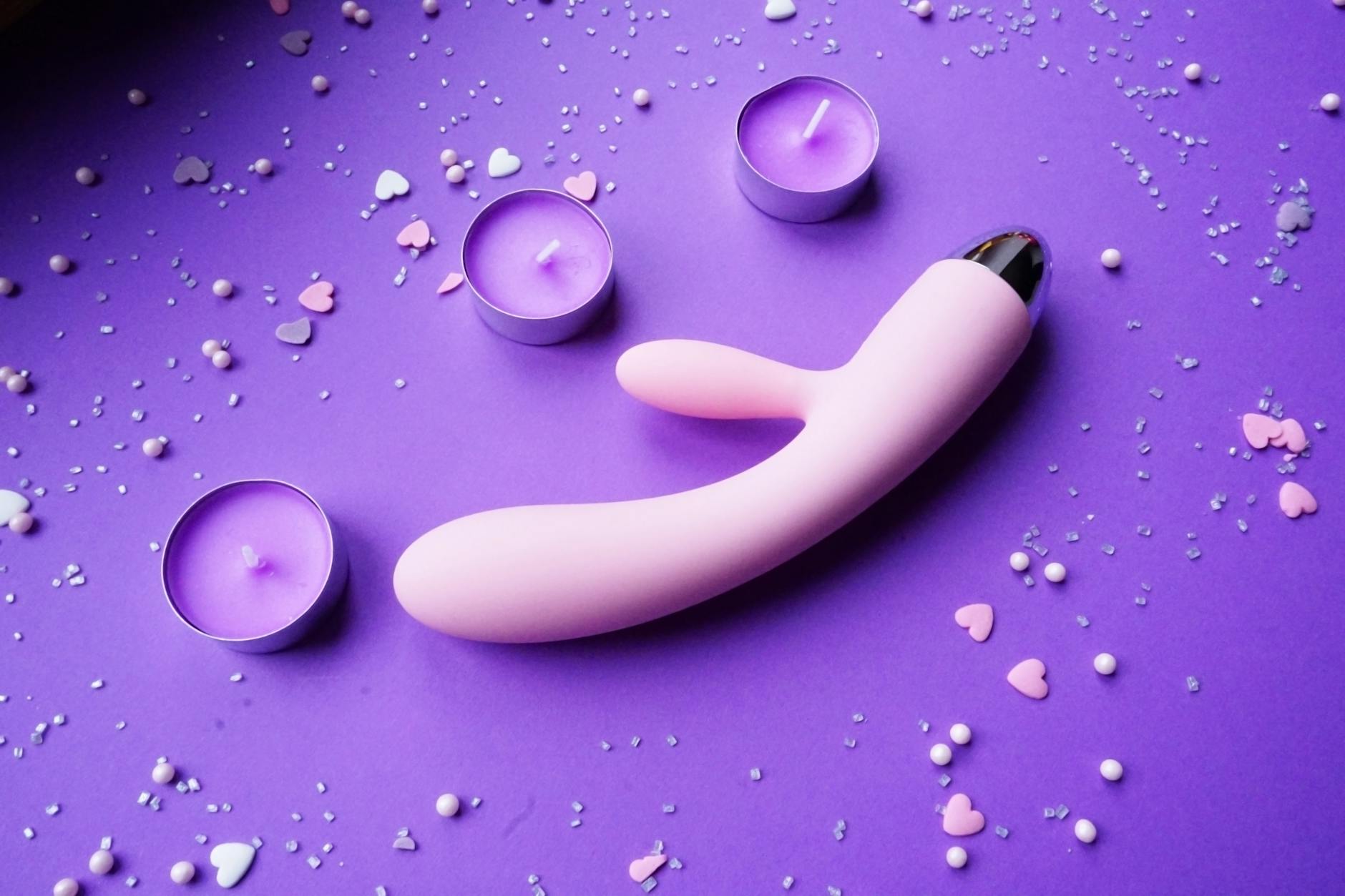
How Lemon Vibrators Restore Intimacy When You Feel Disconnected From Your Body
Let's name what's actually happening
You used to feel things. Anticipation, arousal, that warm pull low in your belly. Now there's a kind of fog between you and your body. It's not that you don't want pleasure. It's that your nervous system has taken the exit ramp, and desire feels like something happening to someone else.
This disconnection is real. It's also fixable.
Why your body goes numb (and it's not broken)
Depersonalization, dissociation, burnout, relational strain. These states are your nervous system's way of saying it's overwhelmed. When your brain perceives too much stress, grief, or unsafety, it dampens sensation as a protection. It's a feature, not a bug. But it's one that turns intimacy into work.
What most people don't realize: sensation can come back, and lemon clitoral vibrators are specifically useful for this because they don't require the kind of psychological readiness that other tools demand. Traditional vibrators need you to be somewhat present and engaged. Lemon sucker toys work differently. They generate sensation so specific and non-invasive that they can reach pleasure before your mind catches up.
I think of them as a diagnostic tool. They're gentle enough that your body can respond without your conscious permission. And that response, when it happens, tells you something important: your capacity for pleasure is still there. It's just been muted.
The neuroscience of re-entry
When we're disconnected from our bodies, the nervous system is stuck in a protective state. Arousal requires a shift into what therapists call parasympathetic activation. Lemon vibrators and other clitoral suction toys are uniquely good at triggering this because the sensation is foreign enough to interrupt rumination and specific enough to anchor attention.
Unlike traditional vibrators, which rely on repetitive friction, lemon suction stimulation creates a rhythmic pattern of pressure that your body recognizes as safe and novel at once. There's no performance demand. There's no waiting for arousal to build through conventional means. The sensation itself is the bridge.
In clinical terms, this is gentle sensate focus work. But you don't need to know that language. You just need to know that something is happening to your tissue and nerve endings, and that happening is real, measurable, and not dependent on your emotional availability.
The practical pathway back
Here's what I recommend to clients rebuilding intimacy with their own bodies:
Start in a space where you feel safe. This matters more than mood. Not dim lighting and candles. Safe means: locked door, no one needs you for the next 30 minutes, phone on silent. Safety quiets the alarm system that's been broadcasting.
Use water-based lubricant even if you're not sure you need it. When you're disconnected, your natural lubrication often doesn't show up even when arousal is possible underneath. Lubricant removes friction as a variable. It also signals to your body that this is intentional and cared for.
Start low and slow. Most lemon vibrators have multiple patterns. Patterns 1 and 2 are almost always the best entry point. You're not trying to come. You're trying to feel something, anything, that breaks the numbness.
Give it ten minutes minimum. Your nervous system won't shift in two minutes. It took weeks or months to get numb. Ten minutes of consistent, non-demanding sensation is actually asking very little. Afterward, notice. Did anything shift? Warmth, tingling, a pause in the mental chatter? That's the real win.
What happens when sensation starts to return
Most people feel it first as a low-level tingling, sometimes described as almost electric. Then comes warmth. Then, for many, a sense of the body being present again, the way it was before.
The first orgasm after reconnection is often not the most intense you've ever had. It might be muted, brief, confused. That's normal. You're waking up something that was dormant. Consistency matters more than intensity right now.
If nothing happens the first time, that's also fine. Dissociation didn't develop overnight. Some nervous systems take three, four, five sessions before sensation cracks through. The fact that you're creating the conditions for it is what counts.
Lemon vibrators versus the traditional route
Why lemon sucker toys specifically when you're rebuilding? Three reasons.
First, they don't mimick the sensation of partnered sex the way traditional vibrators do. When you're trying to reconnect with your own body, that mimicry can actually get in your way because it reintroduces performance expectations. Lemon clitoral vibrators create a totally new sensation, one that has no precedent in your sexual experience. That newness is liberating.
Second, the suction-based sensation is easier to "feel through" dissociation than linear vibration. It's almost mechanical in a way that bypasses overthinking. Your body either responds to the pressure pattern or it doesn't. There's no ambiguity to interpret.
Third, they're quieter and less dominating. You're still present. The toy is a tool, not a replacement. This matters when you're learning to inhabit your body again rather than escape it.
When reconnection requires more support
If you're six, eight, ten sessions in and nothing is shifting, that's information too. It might mean the dissociation is trauma-related and needs somatic or trauma-informed therapy. Or it might mean you need to address the underlying stress or relational rupture that triggered the numbness in the first place.
Lemon vibrators and clitoral suction toys are excellent for re-entry, but they're not therapy. If disconnection from your body is tied to unprocessed grief, relational betrayal, or trauma, they're most useful alongside professional support, not instead of it.
The return to partnered intimacy
Once sensation starts coming back, the question becomes: how do you move this into partnered play without losing the thread?
Honestly? Slowly. The reconnection work you're doing solo is foundational. It's you proving to your nervous system that pleasure is possible, that your body can be trusted, that sensation doesn't equal threat. That evidence is what makes partnered intimacy feel safe again.
When you're ready, showing a partner a lemon clitoral vibrator (or another clitoral sucker toy) can actually be gentler than traditional sex because there's no performance expectation. Your partner can be present without needing to "do" anything that requires your readiness. You're building back together, not from a place of deficit.
The patience piece
Reconnecting with your body after dissociation or burnout is not a sprint. It's a practice. Some days you'll feel present and responsive. Other days you'll be back in the fog. That's not failure. That's your nervous system calibrating.
Lemon vibrators and other clitoral suction tools are designed for this exact work because they meet you where you are, not where you think you should be. They ask nothing of you but presence. And they offer, in return, evidence that your capacity for sensation is still there.
Waiting.
Common questions about reconnecting with sensation
How long does it usually take to feel something again after disconnection?
It varies wildly. Some people feel a shift in the first session. Others take weeks. The timeline depends on how long you've been dissociated, whether there's trauma underneath, stress levels, and your nervous system's baseline sensitivity. The important thing isn't speed. It's consistency. Weekly or twice-weekly sessions matter more than intensity.
Can lemon vibrators help if the disconnection is due to relationship problems, not just stress?
Yes, but with a caveat. If you're numb because of relational strain, unresolved conflict, or unsafety with a partner, reconnecting solo with a lemon clitoral vibrator can help you separate your own body's capacity from what's happening in the relationship. That clarity is often the first step toward deciding what needs to change relationally. But the toy isn't a substitute for addressing the relational issue itself.
What if I feel guilty using a clitoral vibrator when I'm supposed to be present with my partner?
This is common, and it's worth examining. Pleasure, especially when you're rebuilding it, is not selfish. It's a form of self-care and nervous system regulation. If you feel guilty, that's often a sign that you need permission from yourself, not from your partner. Solo pleasure work is foundational. Partnered pleasure builds on top of it.
Does using a lemon sucker toy mean I won't enjoy partnered sex anymore?
No. In fact, most people find the opposite. When you reconnect with your own body and what sensation feels like, partnered sex becomes more interesting, not less. You know what you like. You can communicate it. You're present instead of performing.
What if I have numbness in the clitoral area itself, not just dissociation?
That's a different issue, and it's worth discussing with a gynecologist or sexual health specialist. Lemon vibrators and clitoral suction toys can sometimes help with mild numbness, but if the issue is neurological or related to medication, you may need a different approach. That said, trying a lemon clitoral vibrator costs nothing and is worth exploring before assuming the numbness is permanent.
Can I reconnect with my body without using a toy at all?
Yes. Meditation, somatic therapy, sensate focus exercises with a partner, and intentional touch can all help. But lemon vibrators and other clitoral suction toys are useful shortcuts because they offer a specific, measurable sensation that doesn't rely on your psychological readiness. If other methods aren't working, they're worth trying.
References and sources
This article draws on clinical experience with relationship dynamics and nervous system recovery, as well as evidence-based practices in somatic therapy and sensate focus work. For deeper reading:
Porges, S. W. (2011). The Polyvagal Theory: Neurophysiological Foundations of Emotions, Attachment, Communication, and Self-Regulation. Norton. (Foundational work on vagal tone and nervous system states)
Gottman, J. M., & Silver, N. (2015). The Seven Principles for Making Marriage Work: A Practical Guide from the Country's Foremost Relationship Expert. Harmony. (Sensate focus and reconnection in partnerships)
van der Kolk, B. (2014). The Body Keeps the Score: Brain, Mind, and Body in the Healing of Trauma. Viking. (Dissociation and body reconnection after trauma)
For personalized support around reconnecting with intimacy, consider reaching out to a therapist or relationship coach who specializes in nervous system work. We're here to help: /contact