
Let's be real about vibrator intensity
You bought a lemon clitoral vibrator because you wanted better orgasms, or more consistent ones, or maybe just to feel something again. And then you turned it on and immediately thought, "Wait, is this supposed to feel like this?" Intensity matters more than people admit. Too high and it's numbing or uncomfortable. Too low and you're just wasting battery. Most people spend way too long guessing instead of actually experimenting with intention.
Here's the thing: your body isn't broken if setting 1 feels boring and setting 5 feels too much. That's actually normal. And it changes depending on your cycle, stress level, how long it's been, and what else is going on in your life. The goal isn't to find one perfect setting and stick with it forever. It's to understand what your body is telling you right now and adjust accordingly.
Why intensity feels different every time
Your nervous system isn't a machine with fixed settings. Three major factors shift how intensity registers:
Arousal level matters first. When you're just starting out, lightly aroused or still waking up to the idea, a high intensity setting can feel jarring or numb. Your nerve endings aren't primed yet. Low intensity when you're only mildly aroused actually allows you to feel the sensation building. Once you're genuinely turned on, you often need a higher setting to reach that peak. It's not that you like pain or intensity for its own sake. It's that arousal changes your sensory threshold.
Tissue sensitivity shifts with your cycle. If you menstruate, the week before your period often brings heightened sensitivity everywhere, including down there. Some people find they want lower intensity during this window because everything feels more intense already. Others find they want higher intensity because their threshold is naturally higher due to hormonal changes. The only way to know your pattern is to pay attention over a few months.
Stress and fatigue dull sensation. When you're tired, anxious, or carrying tension, vibration can feel muted. You might instinctively reach for a higher setting without realizing you're actually just depleted. A lower setting with longer warm-up time often works better when you're running on empty.
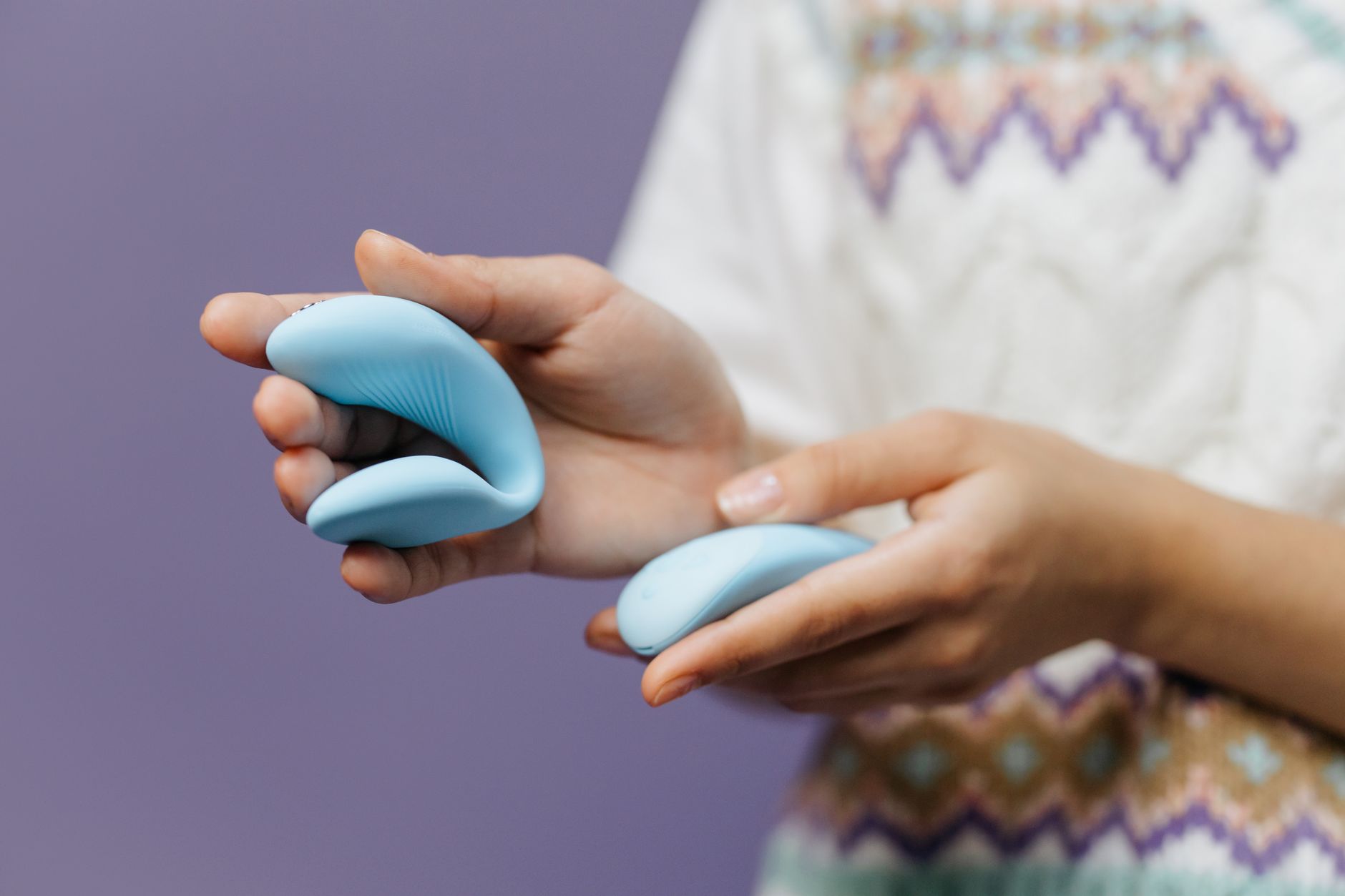
Photo by cottonbro studio on Pexels
How to actually test what works
Forget everything you think you know about what you "should" like. Here's a practical framework:
Start at setting 1 or 2, always. Even if you think it'll feel weak. Give it 30 seconds to a minute. Notice how your body responds. Does it feel tingly? Numbing? Pleasant but distant? There's no right answer. You're gathering data.
Stay there for 3-5 minutes minimum. Your nervous system needs time to adjust and warm up. Pleasure builds. What felt boring at 30 seconds often reveals itself as genuinely nice by minute three.
Only move up if you want more, not because you're bored. This is the critical distinction. Boredom usually means you need more mental engagement (a different thought, a different fantasy, a different position), not more intensity. Wanting more often means your body is signaling readiness for a change.
When you move up, go one setting at a time. Don't jump from 2 to 5. The difference between adjacent settings is usually meaningful. You'll find your sweet spot faster.
The ideal setting usually isn't the highest. Most people find their pleasure zone at medium-high intensity, not maximum. Why? Because the goal is sensation, not conquest. Maximum intensity often produces numbness rather than pleasure, especially with lemon clitoral vibrators that use suction rather than pure vibration.
The relationship between lemon vibrator patterns and intensity
Intensity isn't just about power. The pattern matters too. A lemon vibrator like the Lem works through suction and pulse, not constant vibration. This means a lower intensity with a rhythmic pulse pattern often produces more reliable pleasure than maximum intensity with a flat setting. You're getting the benefit of stimulation without the numbing effect of relentless high-frequency buzzing.
If you have one of these lemon sexual toys, experiment with combining a medium-low intensity with different pulse patterns. You might find that setting 3 with the right rhythm feels better than setting 6 on pulse. That's exactly how it's supposed to work.
When to pause and recalibrate
Three scenarios where you should dial it back:
Pain or sharp discomfort. Not the good kind of intense pleasure, but actual pain. Stop immediately and drop to a lower setting or take a break. Your body is telling you something. Listen.
Numbness creeping in. You stop feeling individual sensations and everything becomes a blur of buzzing. That's your cue to reduce intensity and take a 30-second break. Sensation usually comes back once you give your nerve endings a rest.
Orgasm not building, just stalling. You've been going for 15 minutes at high intensity and nothing's happening. This often means you went too high too fast. Drop back down, slow down, and let arousal catch up.
The practical reality of adjusting over time
Your ideal intensity today might not be your ideal intensity in three months. That's fine. As you get more comfortable with your lemon clitoral vibrator, your understanding of your own body refines. Sometimes that means you discover you like lower intensity than you thought because you've learned how to use the patterns better. Sometimes it means your preference shifts as your life changes.
The couples who navigate this best are the ones who treat intensity as a conversation with their own body, not a test to pass. You're not trying to prove you can handle maximum settings. You're trying to find what actually feels good, which is different for every person and changes with circumstances.
Building confidence with your settings
Honestly, most discomfort around intensity comes from not knowing if what you're experiencing is normal. It is. Your body's sensitivity to vibration is unique. That's not a flaw. It's data. Use it.
If you're new to lemon vibrators or clitoral vibrators in general, spend at least two or three sessions in the lower-to-medium range before you even consider jumping to higher settings. This gives your nervous system time to map the sensations and your brain time to build positive associations. You're not being cautious. You're being strategic.
The people who get the most out of their lemon adult toys are the ones who treat exploration as playful, not pressured. No timer. No goal other than "what feels good right now?" When you approach intensity that way, you usually find settings that genuinely work for you.
Frequently asked questions about lemon vibrator intensity
How do I know if I'm using a lemon clitoral vibrator correctly if the sensation feels different than I expected?
Expected is doing a lot of work in that sentence. Most expectations come from porn or friends' experiences, not from your actual body. If sensation feels different than expected but pleasant, you're using it correctly. If it feels uncomfortable or numb, try a lower intensity and longer warm-up. Correct use is just "does this feel good to me right now?" Everything else is noise.
Can I damage my sensitivity by using a lemon vibrator too much on high intensity?
Temporarily desensitizing is real and can happen if you use maximum intensity every single time, multiple times daily, for weeks on end. Your nerve endings basically go "okay, I'm numb" as a protection mechanism. The fix is simple: take breaks, vary intensity, give yourself vibrator-free days. Sensitivity bounces back pretty quickly. Long-term damage from normal use is not a real concern.
What if my partner and I have different intensity preferences?
This is extremely common. You might want setting 4, they might want setting 2. The good news is that lemon vibrators let you dial it independently if you're both using the device, or you can take turns with different settings. Or you can bring it into partnered play where they control it and you guide them toward your preference. Honestly, this is a conversation worth having anyway because it usually reveals something useful about how you each experience pleasure.
Should intensity feel the same every time I use my lemon vibrator?
Absolutely not. Your body is a living system, not a vending machine. The same setting might feel perfect one day and underwhelming the next depending on stress, sleep, hormones, and what else is going on in your head. This is why chasing "the perfect setting" is less useful than staying curious about what your body wants today.
Is there an intensity level that works for everyone?
No. I've worked with people whose ideal setting is 1 or 2 and others who prefer maximum intensity. Neither is more valid or normal. The range exists because bodies exist in a range. Your sweet spot is personal. That's the whole point.
How do I explain to a partner that I need a certain intensity without it feeling like criticism?
Frame it as exploration, not feedback. "I want to experiment with how this feels at different settings" or "I'm realizing I like it slower" feels collaborative. That's because it is. You're not saying they did something wrong. You're saying your body is giving you information and you want to follow it together.
The takeaway
Intensity isn't a fixed number. It's a conversation between you and your body, happening in real time. Start low, pay attention, adjust based on what actually feels good, and give yourself permission to change your mind. That's how you find the right setting. Not through guessing, not through following a script, but through genuine exploration and the willingness to listen to what your nervous system is telling you.
If you're looking to deepen this exploration, our guide on using lemon vibrators for better sensation after prolonged stress walks through how stress specifically affects your sensitivity. And if you're building this conversation with a partner, how lemon vibrators work for couples with different refractory periods offers some concrete starting points.
Your pleasure matters. Your body's signals matter. That's worth taking seriously.