The antidepressant pleasure paradox
You started the medication to save your life. Now it's dampening the very thing that used to feel good. That's not a character flaw. It's not psychological. It's chemistry.
SSRIs and SNRIs work by keeping serotonin circulating longer in your brain. That steadying effect is why you feel less panicked, less crushed by morning dread. But serotonin also plays a direct role in sexual response. Higher serotonin can mean lower dopamine sensitivity, and dopamine is what fires up desire and intensifies sensation. Roughly 40-60% of people on these medications report delayed orgasm, reduced sensation, or both. Most don't know why, and almost none are told that solutions exist.
Here's what I tell my clients: the medication isn't the enemy. It's the tool that got you functional. The real work is learning to pleasure yourself differently now that your nervous system has shifted.
Why standard vibrators often don't cut it on SSRIs
When sensation is already muted, a weak or slow vibrator feels like background noise. Many people on antidepressants reach for their old vibrator, use it the same way, and feel nothing. Then they assume they're broken. Wrong diagnosis.
Your body isn't broken. It's just requiring a different type of stimulation to reach the same endpoint.
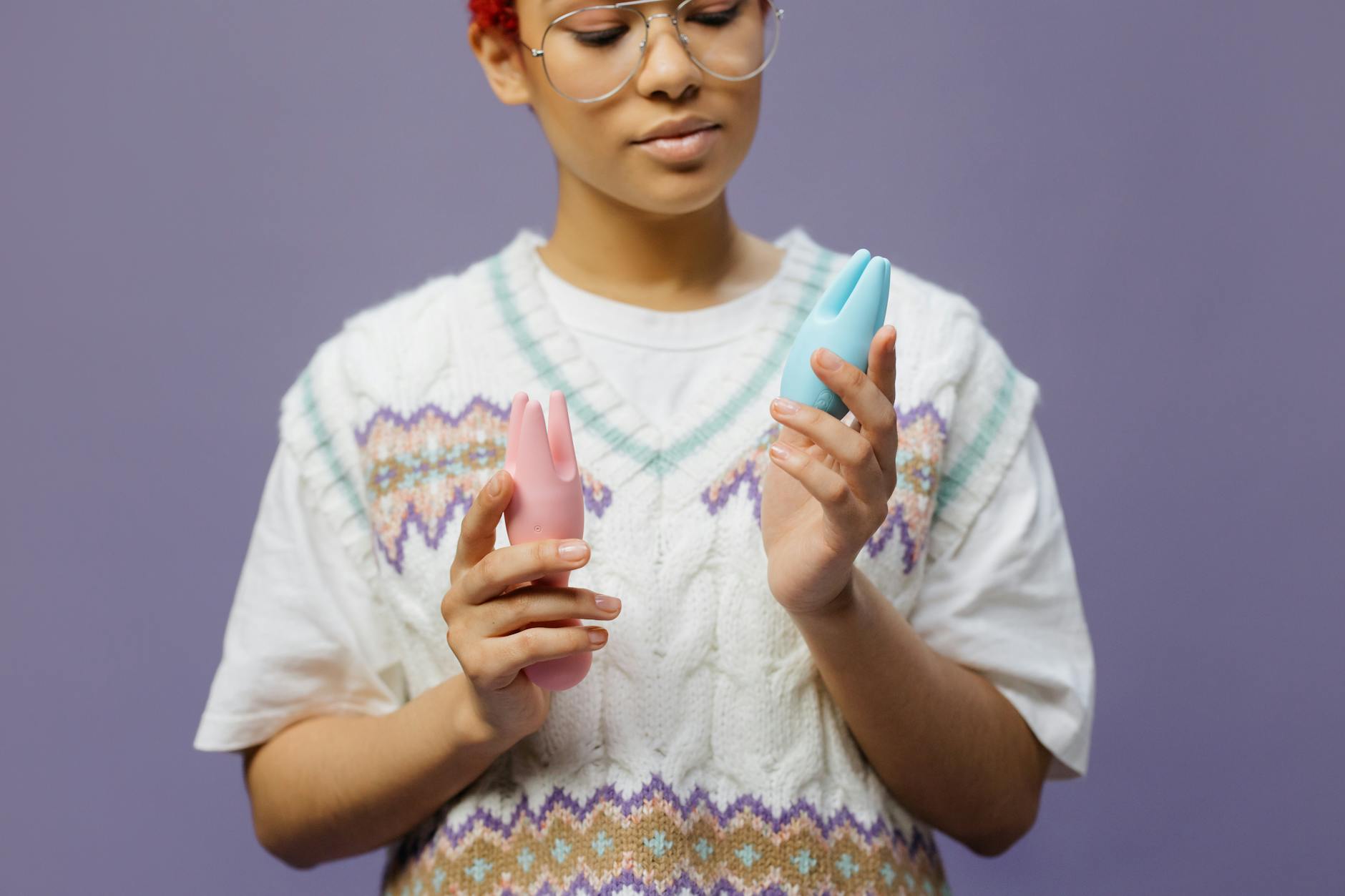
This is why lemon clitoral vibrators work so well for antidepressant users. The suction-based mechanism of devices like the Lem operates on a completely different neurological pathway than traditional vibration. Instead of relying on sensation speed and sensitivity, suction creates a feeling of pulling and engulfment. It stimulates the clitoris in a way that's more assertive without being punishing. For someone whose receptors are already dampened by serotonin reuptake inhibition, that directness matters.
Wand vibrators, by contrast, rely on rapid micro-vibrations. If sensation is muted, you're chasing intensity you may never catch. A lemon sucker doesn't need you to be hypersensitive. It just needs contact and a bit of patience.
Timing your dose around pleasure
One of the simplest hacks almost nobody knows: when you take your antidepressant shapes how much it affects pleasure.
Most SSRIs hit peak concentration in your bloodstream 4-6 hours after you swallow them. If you're taking your dose in the morning, your serotonin is at its highest in early afternoon. If arousal and orgasm are important to you, consider taking your medication in the evening instead. Talk to your doctor first (do not just change your timing without clearing it), but many prescribers are fine with this shift if you have consistent dosing time.
Alternatively, plan intimate time for the windows when the medication's effects are lowest. For a daily SSRI, that's usually late evening or early morning, right before your next dose. Not foolproof, but meaningful for some people.
Another angle: some antidepressants hit sensation harder than others. Sertraline and paroxetine are notorious for sexual side effects. Bupropion actually increases dopamine and often improves sexual function. If you've been on your current medication for 6 months and pleasure is still flatlined, ask your doctor about trying a different class. It's a legitimate medical conversation, and switching is common.
The warm-up time becomes your strategic advantage
When sensation is dampened, slow arousal isn't the problem. It's the baseline. Lean into it.
Instead of the 5-minute warmup that used to work, budget 20-30 minutes. This isn't suffering. It's actually often better. That longer buildup allows your body to reach a higher baseline of arousal before you introduce the lemon vibrator. You're not fighting against numbness. You're giving it time to naturally crest.
Start with touch. Hands, lips from a partner if you have one, or your own fingers. Spend at least 10 minutes on foreplay before introducing any toy. This primes your nervous system and draws blood to the area, which helps even if sensation is muted.
Then introduce the lemon clitoral vibrator. Start at the lowest suction setting (usually patterns 1-2 on devices like the Lem). Spend 5-10 minutes there before moving up. The goal isn't to white-knuckle your way to an orgasm. It's to gradually dial up intensity while your body has time to register each step.
Many people who struggle on antidepressants are rushing. They expect the old timeline. They don't get it, panic, and give up. When you commit to the slower pace, the sensations actually land differently.
What to do if orgasm still doesn't arrive
Sometimes even with all the right strategies, climax stays out of reach. That's worth addressing directly with your prescriber.
First, don't assume it's permanent. Sexual side effects from SSRIs can peak in the first month or two, then gradually improve as your body adjusts. Give it 2-3 months before concluding it's intractable.
If it persists, ask about these options.
Timing a dose: Some doctors recommend taking your SSRI right after orgasm, not before. This is off-label and should only be done with medical approval, but it can work for some people. You get the antidepressant benefit throughout the day, but avoid the peak concentrations during sex.
Taking a medication holiday: Very rarely, and only with medical supervision, taking a day off from your SSRI once weekly can restore sexual function without compromising mental health. This only works for certain medications and certain people. It requires discussion with your doctor and careful monitoring.
Switching to a different SSRI or adding an adjunct: Bupropion, when added to an SSRI, can counteract sexual side effects. Buspirone and sometimes low-dose naltrexone are used off-label to restore orgasmic response. These are all doctor conversations, not self-help moves.
The key point: sexual dysfunction from antidepressants is treatable. You don't have to accept it as the price of mental health.
Building pleasure back into identity
Here's what I see most often with my clients on antidepressants: the medication works on depression, but somewhere in the fog, they've internalized that pleasure just doesn't apply to them anymore. That's the lie we need to untangle.
Your body is the same body. Your capacity for pleasure is the same capacity. The neurochemistry has shifted, which means the technique needs to shift. That's all.
Using a lemon sucker or a lemon clitoral vibrator isn't a workaround or a consolation prize. It's just a better fit for your current neurological reality. And honestly, lots of people find that suction-based stimulation feels deeper and more satisfying than what they had before. They're not losing pleasure. They're finding a new flavor of it.
Spend time with yourself. Learn what feels good at your current sensitivity level. Try the lemon clitoral vibrator and give it real time. Don't judge yourself against some phantom version of before. You're not broken. You're adapting.
People also ask
How long does it take for sexual side effects from antidepressants to go away?
It varies widely. Some people see improvement within 2-4 weeks as their body adjusts. Others take 2-3 months. And some experience persistent sexual side effects throughout treatment, which is why talking to your doctor matters. If you're past the 8-week mark and still struggling, that's when to explore medication changes or adjuncts, not just acceptance.
Can you stop taking antidepressants to improve your sex life?
You shouldn't do this without medical supervision. Stopping SSRIs abruptly can trigger withdrawal symptoms and a crash in mood. If sexual dysfunction is genuinely affecting your quality of life, that's a real conversation to have with your prescriber. But the answer is usually not to quit the medication. It's to find a better medication or a combination that works for both your mental health and your sexuality. Both matter.
Is it normal to have no desire at all on antidepressants?
Lowered desire is common, but zero desire can signal that your current medication or dose isn't right for you. It's also worth checking whether depression itself is still present underneath the medication. Sometimes people stay on the same dose longer than needed. Your prescriber should revisit this periodically. Desire shouldn't disappear completely.
Do lemon vibrators work better than regular vibrators for antidepressant users?
They work differently, not necessarily "better." But yes, many antidepressant users report greater success with suction-based devices like lemon clitoral vibrators than with traditional vibrators. Suction creates a distinct sensation that bypasses some of the numbness that comes with dampened dopamine sensitivity. That said, everyone's neurochemistry is unique. What works brilliantly for one person might not work the same way for another. The best approach is trying what feels promising.
Should I tell my doctor I'm using a vibrator?
Yes. Your prescriber isn't there to judge your sexuality. They're there to help you have a functioning life, and that includes sex. If you're struggling to orgasm and using a device to help, that's useful clinical information. It tells your doctor something about the severity of the sexual side effect. And it opens the door to real solutions.
Can antidepressants affect how long arousal takes to build?
Absolutely. Delayed arousal is one of the most common sexual side effects, often even more noticeable than delayed orgasm. This is precisely why longer foreplay and slower buildup matter. You're not doing something wrong. Your nervous system just needs more time to activate. That's why patience, the right toy, and realistic expectations make such a difference.
The bottom line
Antidepressants save lives. Sometimes they flatten sensation along the way. That's not a failure of the medication or of you. It's a shift that requires a new approach.
Lemon clitoral vibrators, longer warm-up time, and conversations with your doctor give you real options. You don't have to choose between mental health and pleasure. You get both. It just might look different than it used to.
Ready to explore what works for your body now? Start with a conversation with your prescriber, then give yourself permission to experiment. Your nervous system is listening.