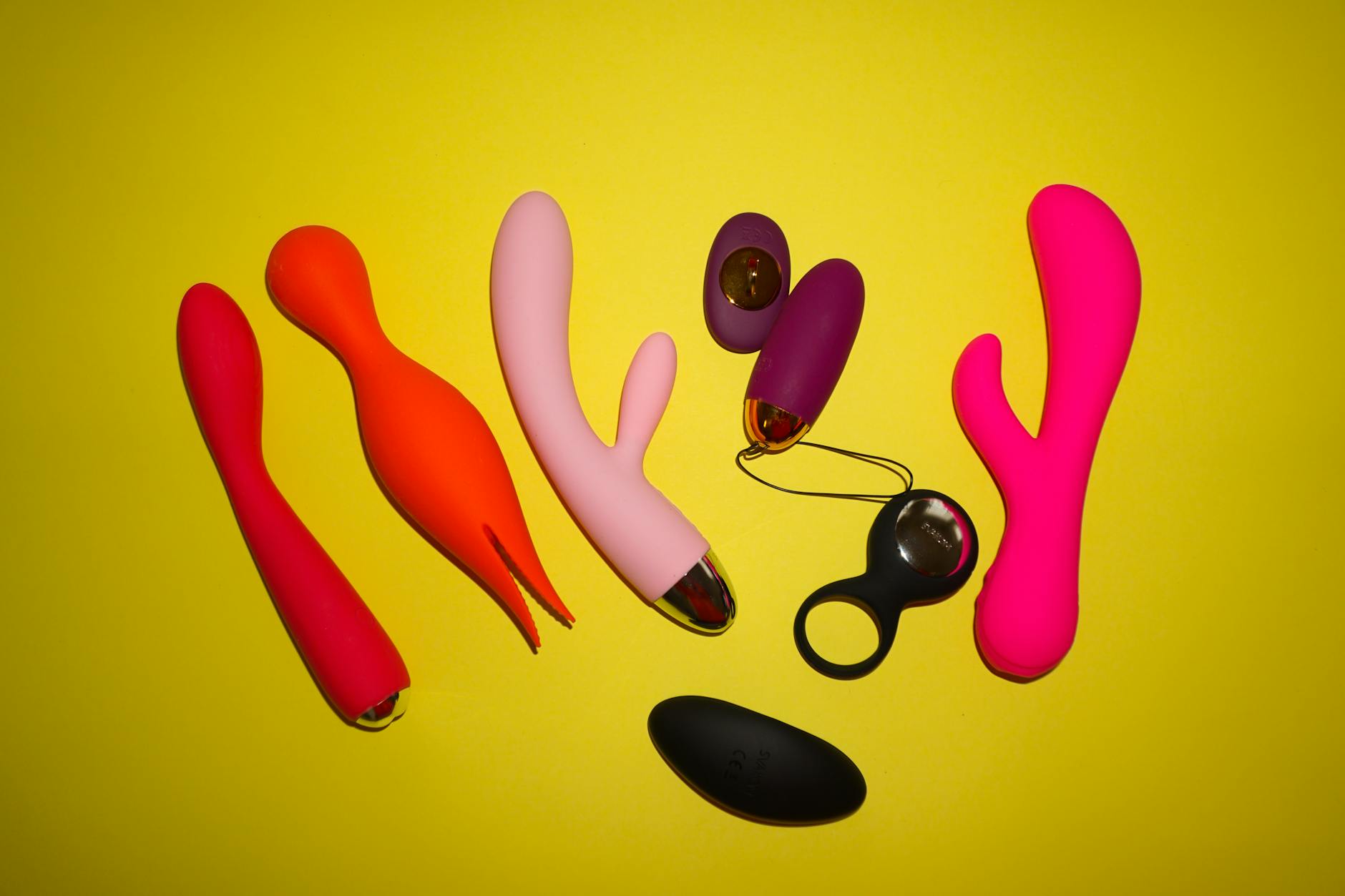
Let's start with what nobody tells you
Toy anxiety is real, and it's not a character flaw. The moment you think about introducing a vibrator into your solo or partnered life, your brain can flood with doubt. What if it's too intense? What if I don't like it? What if something feels wrong? What if my partner judges me? These aren't silly questions. They're the sound of genuine hesitation, and ignoring them tends to make them louder.
Here's the thing: anxiety about adult toys isn't something you need to white-knuckle through. It's information. It's telling you that you need a different approach to exploration, not that exploration itself is wrong. That's where lemon vibrators come in.
Why lemon vibrators work for anxious first-time users
Lemon clitoral vibrators are specifically designed with beginners in mind, and that matters for people wrestling with toy anxiety. Unlike intimidating wand vibrators or complicated multi-mode devices, a lemon vibrator keeps things simple: one tool, intuitive controls, manageable intensity.
The design philosophy behind toys like the Lem is progressive confidence building. You're not jumping into the deep end. You're wading in. The suction-based stimulation that lemon adult toys provide feels more natural than you might expect. It mimics skin-to-skin sensation in a way that doesn't feel alien to your body. Many people describe it as less mechanical and more... present.
That psychological shift matters. When anxiety tells you "this is going to feel weird," and it doesn't, that's a small win your nervous system registers. One small win opens the door to the next.
Building a safety foundation before you begin
Anxiety thrives in uncertainty. So before you ever touch a lemon vibrator, create conditions that feel predictable and controlled.
Timing is everything. Don't introduce a new toy when you're already stressed, rushed, or emotionally depleted. Choose a time when you have at least 20 minutes of genuine privacy and zero pressure to perform or produce results. This is exploration, not an exam.
Set a boundary conversation. If you have a partner, talk about your feelings before toy time, not during. Say something like: "I want to try something new, and I'm nervous about it. Can we agree that either of us can pause if something doesn't feel right?" This isn't weakness. It's clarity.
Create a comfort ritual. Light a candle. Put your phone in another room. Take three deep breaths. Whatever grounds you. Your nervous system needs to know it's safe before your body can relax into sensation.
The first exploration: going low and slow
When you first unwrap a lemon vibrator, you don't use it yet. You hold it. Feel the weight in your hand. Look at it. Run your finger over the surface. This sounds elementary, but it's not. Anxiety wants you to skip steps. Your job is to go slower than that.
Start with the vibrator off. Place it against your inner thigh for 30 seconds. Not on your clitoris. Somewhere less charged, somewhere that lets your body get used to the object without the intensity of direct stimulation.
Then turn it on at the lowest setting. Many lemon sexual toys have a gentle starting point that feels almost quiet compared to what you'd expect. Let it vibrate against your thigh for a minute. Get familiar with the sensation of vibration itself, not the intensity of pleasure.
Only then, if it feels good, move to the external clitoris. Stay at the lowest setting. You're not trying to orgasm. You're not trying to achieve anything. You're gathering data: does this feel okay? Is it too much? Does my body want more or less?
What anxiety often disguises as physical sensation
Sometimes when people say "this is too intense," what they actually mean is "my nervous system is activated and I don't recognize it as good activation." Arousal and anxiety live next door to each other neurologically. Your heart rate goes up with both. Breath quickens with both. A flush creeps across your skin with both.
The difference: arousal curiosity wants you to stay. Anxiety wants you to escape.
If you feel your breath getting shallow or your body tensing up, pause. Ask yourself: am I excited or am I afraid? They feel similar at first. Usually it becomes clear within 10 seconds if you just stop and notice.
If it's excitement, you can continue. If it's fear, you stop and ask what the fear is about. Often it's not about the toy at all. It's about feeling out of control, or about old messages that pleasure isn't safe, or about the vulnerability of letting yourself want something.
None of these require you to push through. They require you to pause and listen.
Moving from solo exploration to partnered use
Introducing a lemon clitoral vibrator into partnered sex when you already carry anxiety about toys adds a layer. Now you're managing both your own nervous system and your partner's potential reaction.
Start with a conversation that's explicit and unanxious. Not: "I want to try something." That vagueness breeds anxiety. Try: "I've been exploring with a vibrator on my own and I really like it. I'd love for you to be involved. Would you hold it while I guide you? I can show you where feels good."
This gives your partner a role that feels connected rather than replaced. It also keeps you in control. You're directing the intensity, the placement, the speed. That control is grounding when you're already nervous.
If anxiety spikes during partnered use, you get to pause. Say so. "I need to slow down for a second." A good partner pauses. If yours doesn't, that's information about something larger than the vibrator.
Common anxiety spirals (and how to talk yourself through them)
"What if I can't orgasm with it?" You might not. Not immediately. That's completely normal. Lemon vibrators aren't magic wands. They're tools. Your body learns to work with them over time, usually across 3 to 5 sessions. Expecting an orgasm on the first try is like expecting to be good at tennis the first time you pick up a racket. Give yourself grace.
"What if my partner thinks I need the toy because they're not enough?" This is the anxiety talking. A vibrator is not a referendum on your partner. It's a different type of sensation, delivering stimulation in a pattern no human hand can exactly replicate. You can also want your partner and want a lemon vibrator. These aren't opposites.
"What if I like it too much and can't enjoy sex without it?" Unlikely. You're building a new tool, not replacing the others. Many people find that exploring with toys actually increases sensitivity and responsiveness across all types of stimulation. Variety tends to expand capacity, not narrow it.
"What if something feels wrong during use?" Stop. That's it. No judgment, no powering through. Listen to your body. If there's pain or sharp discomfort, stop. If there's just "this doesn't feel right today," stop. Exploration has no deadline.
When to bring in more support
Some people find that even with all the preparation, anxiety around toys stays high or even escalates. That's not a sign you're broken. It's a sign you might benefit from talking to someone trained in both sexuality and anxiety.
A therapist who specializes in sexual health can help you understand where the anxiety is anchored. Sometimes it connects to older messages about pleasure not being safe. Sometimes it's about control and vulnerability. Sometimes it's just nervous system regulation and has nothing to do with shame.
There's no award for "overcoming toy anxiety alone." If you want support unpacking it, that's available. That's also brave.
The long view
Anxiety about trying lemon adult toys usually peaks right before you start, then softens over the first few sessions. Most people describe that shift as: "I don't know why I was so worried." Not because the toy is magic, but because you gave yourself permission to explore at your own pace.
That's what Nancy's Lems Shop has learned from countless conversations: the people who feel best about toy use are the ones who started slow, listened to their bodies, and refused to rush. Lemon vibrators are designed with that kind of patience built in. You're not being sold a product. You're being invited into something that's already yours to begin with.
People also ask
What's the difference between a lemon vibrator and other clitoral vibrators for beginners?
Lemon vibrators use suction-based stimulation rather than direct vibration, which means the sensation feels less mechanical and more like skin-to-skin contact. For people with anxiety around toys, that difference can be huge. It feels more natural, less alien. The lem vibrator also tends to have intuitive, simple controls, which removes the cognitive load of figuring out complicated settings when you're already nervous.
How long should I wait between first trying a lemon vibrator and trying it with a partner?
There's no fixed timeline. Some people feel comfortable bringing a partner in after their second solo session. Others want five or six solo explorations first. The marker is when you feel genuinely curious about sharing it, not pressured. When you can say "I like this and I want you to experience it with me" without fear underneath, you're ready.
Can lemon vibrators actually reduce toy anxiety over time?
Yes. When you use a toy and it feels good, and nothing bad happens, your nervous system updates its threat assessment. Repeated good experiences with a simple, intuitive device like a lem vibrator literally rewires some of the anxiety pathways. This is why starting with a device designed for beginners matters. You're building evidence that toy use is safe.
What if I have past trauma and toy anxiety feels connected to that?
That's worth exploring with a trauma-informed therapist before or alongside toy exploration. Not because toys are unsafe, but because your nervous system may need a bit more scaffolding. A good therapist can help you use tools like grounding techniques and pacing to make exploration feel more manageable. Some people find that very gentle, intentional toy use actually helps with healing. Others need more preparation first. Your pace is the right pace.
Is it normal to feel embarrassed buying a lemon clitoral vibrator?
Completely normal. We've been taught that sexual self-care requires privacy and shame. Shopping for a lemon sexual toy can feel vulnerable even in an anonymous online setting. That's not a sign something is wrong with you. It's a sign of how much cultural weight we carry around pleasure. Buying one anyway is an act of quiet self-advocacy. That matters.
How do I know if my anxiety around toys is something I need to work through versus something that means toys aren't for me?
There's a difference between healthy caution and blocking anxiety. Healthy caution says: "I want to go slowly and make sure this feels right." Blocking anxiety says: "I should want this but I'm terrified and I don't know why." The first one might resolve through patient exploration. The second one might benefit from some therapy work. If you're genuinely uninterested in toys, that's also completely valid. But if you want to explore and anxiety is the only thing stopping you, that's worth addressing.