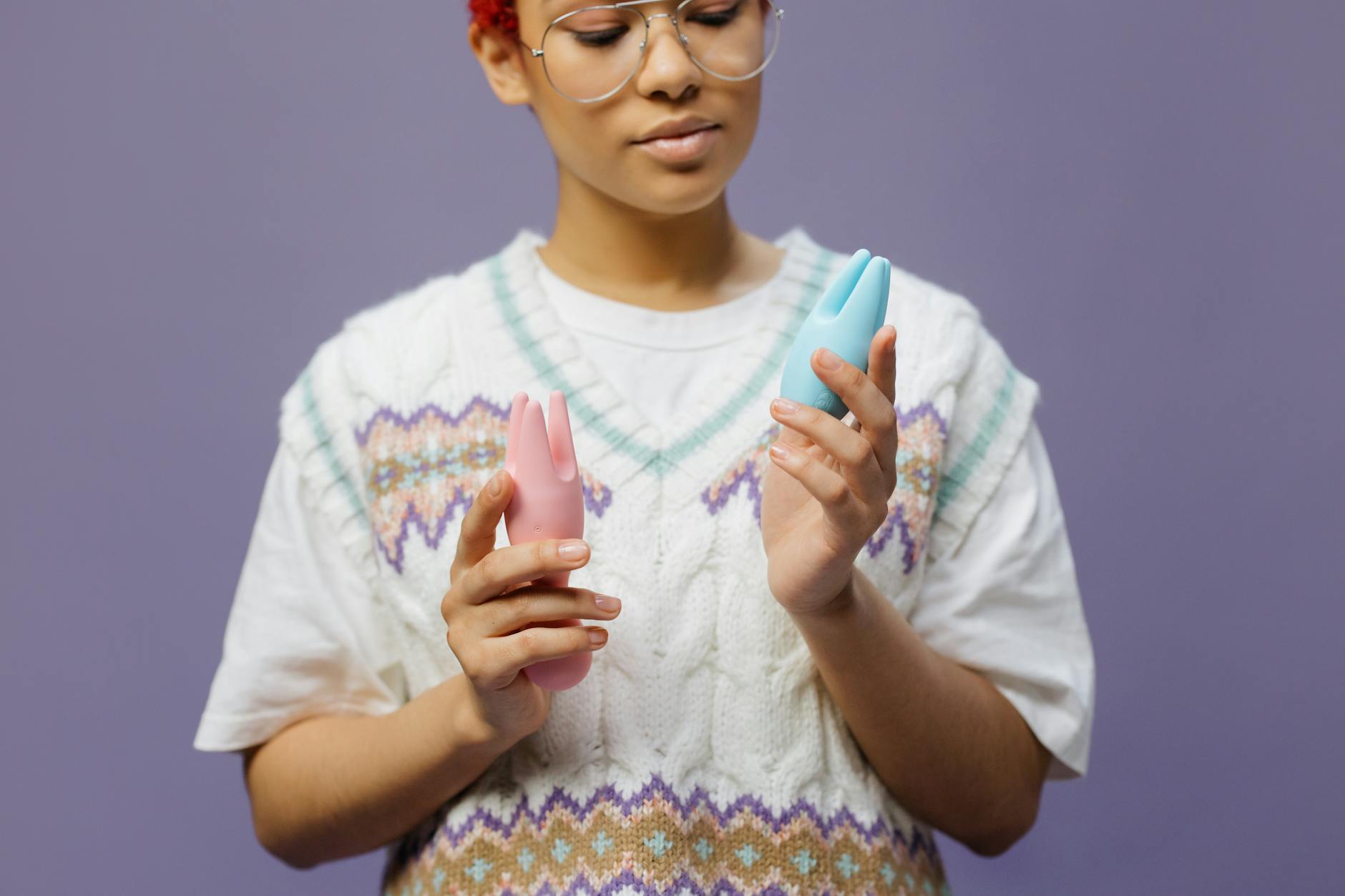
Let's name what's happening
When couples stop talking about sex, it's rarely because there's nothing to say. It's usually because the first conversation went sideways, or you both learned early that it wouldn't be safe, or resentment built quietly until the topic became a third-rail issue. Now sex exists in this weird quiet zone where you're both wondering what the other person wants but nobody's asking.
Here's the thing: lemon vibrators, like the Lem, can be a way to restart that conversation without words. Not instead of words. With them.
Why communication breaks down in the first place
Most partners don't avoid talking about sex because they don't care about pleasure. They avoid it because past conversations went like this: one person brought something up, the other person felt criticized, shame entered the room, and now the topic is loaded with defensiveness.
Or maybe one of you had a parent who treated desire as shameful. Or you grew up in a culture where women's pleasure was never discussed. Or you've been told your body is wrong, your wants are weird, your orgasm is taking too long. By the time you're in a relationship, the walls are already up.
Adding a lemon vibrator into the mix doesn't erase that history. But it can create a different kind of conversation. One where your body is doing the talking first, and words follow.
How a lemon vibrator becomes a communication tool
Here's what happens when you introduce suction-based stimulation into a sexual connection: the sensation is novel enough to shift the context. You're not rehashing old patterns. You're exploring something together that feels newer, less loaded with history.
For many couples, lemon sexual toys like the Lem change the pace of intimacy in ways that naturally open dialogue. When pleasure intensifies or arrives differently than before, people ask questions. "What does that feel like?" "Should I do this?" "Is this good?" The conversation doesn't feel abstract anymore. It's grounded in real sensation, real response.
That's the bridge. Not the toy itself, but the fact that it creates a reason to pay attention together.
The setup conversation (the small one first)
You don't start by saying "I want to use a lemon vibrator with you because we never talk about sex." That's too much weight on one sentence.
Instead, you might say something like: "I've been thinking about trying something new together. There's this type of vibrator called a Lem. I'd like to see if we could explore it together without pressure. No big deal if you're not interested right now, but would you be open to talking about it?"
Notice what's in that: you're taking ownership ("I've been thinking"), you're offering specificity (actual product name, not vague "something"), you're removing pressure ("no big deal"), and you're asking for consent to the conversation before asking for consent to the act.
If your partner says no, that's information too. It's not a rejection of you. It might be "I'm scared," or "I don't understand," or "I need time." Those are all conversations you can have without the toy yet.
When you're both curious but awkward
Many couples buy a lemon clitoral vibrator together and then... just leave it on the nightstand. Neither person wants to be the first to suggest using it. So it sits there, a symbol of good intentions and frozen communication.
Break the ice by framing it practically. "I'm curious if this would feel different. Want to try it with me and just see what happens?" Keep the lights on if you normally do. Stay present with each other. Don't turn it on and disappear into your own head.
The key is togetherness. You're not using a toy. You're using it together. That distinction changes everything.
What to actually say while you're exploring
This is where people get stuck. You're both nervous. The vibrator is in use. Nobody knows what to say. So here's some language that feels natural:
"Tell me what that feels like." (Open ended, genuine curiosity.)
"Is this intensity okay, or do you want it lower?" (Practical, collaborative.)
"I like watching you respond to this." (Simple affection.)
"What do you want more or less of?" (Asking directly, without shame.)
Notice what these have in common: they're short, they ask about sensation or preference, they don't require big emotional disclosures. You're building a small habit of asking and answering. That habit becomes easier. Then you can ask bigger things.
The conversation that comes after
Once you've used a lemon vibrator together, you've actually shared something. The next conversation is easier because you're not talking about an abstract idea anymore. You're talking about an experience you both had.
"I really liked when you were close to me while I used it." "That intensity was too much right away; slower would feel better." "I liked how that felt, but I got in my head about whether you were enjoying watching." These are real observations. They lead somewhere.
From there, you can gradually ask bigger questions. "What would make sex feel more connected for you?" "Is there something you've wanted to try but felt weird bringing up?" "Do you feel like I actually want you, or does it feel like I'm just going through the motions?"
The lemon sucker didn't magically fix your communication. But it gave you a reason to start paying attention to each other's bodies and desires again. And that attention is what opens the door to actual talking.
When one partner is way more enthusiastic
This is real. Sometimes one person is into exploring, and the other person is just going along. That imbalance matters.
If you're the enthusiastic one, don't push. Let your partner go at their own pace. If they try it once and feel awkward, forcing another session just teaches them that this is a source of pressure, not pleasure.
If you're the reluctant one, try to notice what specifically feels uncomfortable. Is it the physical sensation? Is it feeling watched? Is it shame? Is it the fear that your partner will judge your body? Different problems need different solutions. Naming the actual problem is where change starts.
Red flags that signal deeper issues
If your partner refuses to even have a conversation about sexuality, or if they shame you for wanting pleasure, that's not a communication breakdown. That's a respect issue. A lemon vibrator won't fix that. A therapist might.
If you're using toys to avoid talking about real disconnection in the relationship (infidelity, financial stress, parenting conflicts), the toy is a band-aid. Important: address the actual wound.
If either partner feels coerced, that's a stop sign. Full stop. Consent isn't a yes that's been worn down into quiet agreement. It's enthusiastic, or it doesn't count.
How to keep the conversation alive
Once you've broken the seal on talking about pleasure together, the next step is keeping it normal. Sex shouldn't be this mysterious thing you talk about once and then never mention again.
Small check-ins work: "That felt different this week." "I'm in the mood for the Lem tonight, how about you?" "I've been thinking about trying this thing..." The more you normalize talking about what you want, the less loaded it becomes.
If you keep hitting walls, couples therapy with someone who specializes in sexual communication isn't failure. It's the tool you need. A good therapist helps you see patterns you can't see from inside the relationship.
And if you're with someone who won't meet you halfway, that's also information. Your pleasure matters. Your desire to feel connected matters. You deserve a partner who's willing to have the awkward conversations, even if they're uncomfortable.
The bigger picture
Lemon vibrators, and lemon adult toys in general, exist for lots of reasons. Solo pleasure. Stronger sensation. Different kinds of orgasm. But they're also tools for rebuilding trust between partners, because they create a scenario where you both get to pay attention to sensation, response, and desire without the years of baggage that sometimes come with sex.
Your communication didn't break overnight. It won't fix overnight either. But you can start rebuilding it, one awkward conversation at a time. And sometimes, a clitoral vibrator gives you a reason to try.
People also ask
How do I bring up the idea of using a lemon vibrator if my partner has never mentioned wanting toys?
Start small and assume good intent. "I've been curious about trying something new. Would you ever be open to exploring that with me?" doesn't require your partner to already be thinking about toys. It's an invitation, not a criticism. If they say no, ask if you can talk about why. Often it's not "I don't want this." It's "I'm scared," or "I don't understand," or "I need to think about it." All of those are workable.
What if my partner is interested but I'm nervous about them watching?
Tell them. "I'm excited about this, but I'm a little self-conscious. Can we start with the lights lower?" or "Can you focus on what you're feeling rather than watching me?" Your comfort matters as much as theirs. A partner who respects that boundary is showing you they care about you, not just the experience.
Can a lemon vibrator actually fix a broken relationship?
No. A toy can't fix fundamental incompatibility, betrayal, disrespect, or a lack of willingness to work on the relationship. But it can open a door to communication if both partners are willing to walk through it. If the relationship is broken in deeper ways, that needs real work, not a new sensation.
How do I know if my partner is using a lemon vibrator just to please me?
Ask them. "I want to make sure you're actually enjoying this, not just doing it for me. How are you feeling about it?" If they're faking, you'll usually know because the conversation feels one-directional. Real exploration includes them offering opinions, asking questions, and showing genuine curiosity about what they're feeling.
What if we try it and it's awkward?
Most first times with something new are awkward. That's normal. The awkwardness is evidence that you're both trying something unfamiliar. Give it a few attempts before deciding if it's not for you. And if it stays awkward, that's okay too. Not every tool works for every couple.
How do I keep communication about pleasure open after the first time?
Treat it like you'd treat any other part of your relationship. Check in occasionally. "That felt really good last time. Want to do it again?" "I've been thinking about trying this differently..." The more normal and casual you make talking about pleasure, the less loaded it becomes. Regular small conversations beat one big vulnerable disclosure.