Let's start with the hardest part
Infidelity breaks more than trust. It breaks the language you and your partner use to communicate pleasure, safety, and desire. Many couples think rebuilding intimacy means erasing what happened and going back to how things were. It doesn't. Healing means building something new, and that's actually where lemon vibrators can help most.
Here's what I see in my practice: couples who've weathered infidelity often avoid physical touch entirely for months. Then they try to force intimacy back like flipping a switch, which fails because vulnerability without safety never works. The trick is creating a middle ground where pleasure can exist without the weight of the betrayal sitting between you.
Why pleasure matters in recovery
This sounds counterintuitive, but pleasure is not frivolous during recovery. It's actually essential to rebuilding the nervous system's trust response. When you've been betrayed, your body learns to protect itself by shutting down arousal. Reconnecting to pleasure signals to your nervous system that safety is returning.
But here's the thing: pleasure can't be forced. It has to feel earned. That's why many therapists (myself included) recommend couples start with solo exploration before partnered sex. You need to remember what you like without the pressure of performing for someone who just broke your trust.
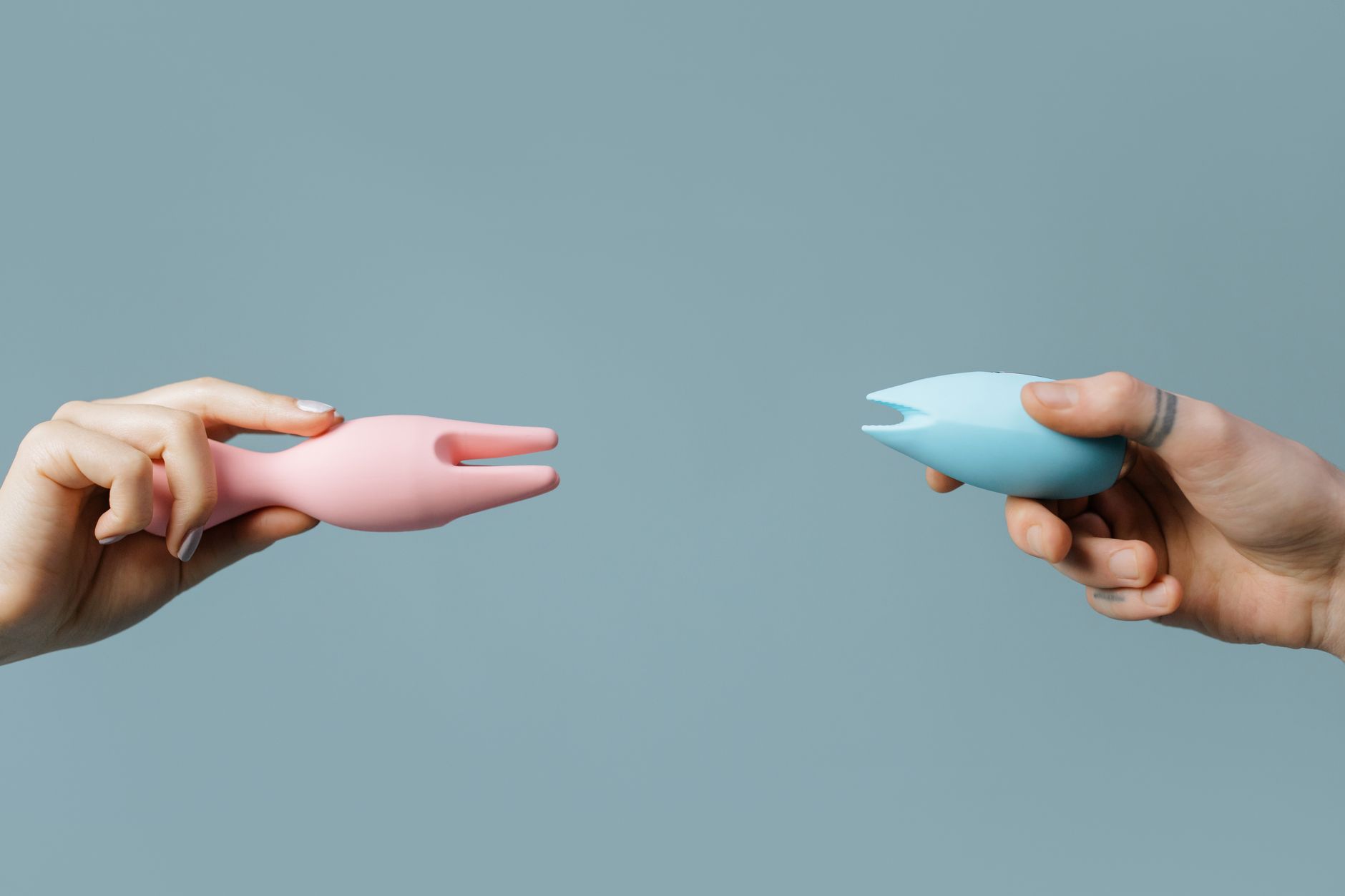
Lemon clitoral vibrators work well here because they're external, controlled entirely by you, and the suction sensation feels fundamentally different from partnered touch. You're not trying to recreate what you had. You're building something unfamiliar, which is exactly the point.
The solo phase comes first
If you're the partner who was betrayed, solo pleasure with a lemon vibrator does three important things:
First, it rebuilds your sense of ownership. Infidelity often leaves you feeling like your pleasure isn't yours anymore. A partner using someone else's body while you were vulnerable is a profound violation of that. Using a lemon sucker on your own terms, in your own space, with no obligation to perform for anyone else, slowly returns that ownership to you.
Second, it separates arousal from the betrayal. Your body may have learned to associate your partner's touch with pain. Pleasure from a toy is a new neural pathway. It's not nostalgia. It's not comparison. It's just sensation.
Third, it gives you data. What intensity feels good? How long do you need to warm up? What kind of breathing helps? When you eventually partner with your spouse again, you'll know exactly what you need, and that knowledge is power.
Spend at least 2-3 weeks here, maybe longer. There's no rush. Your pleasure isn't on someone else's timeline anymore.
When you're ready to invite your partner in
The transition from solo to partnered play is where most couples get stuck. They think it has to look like old sex. It doesn't.
One framework that works well: you use the lemon vibrator on yourself while your partner watches or is present in the room. Not to perform for them. Not even to necessarily touch them. Just to reconnect them with your pleasure in its most authentic form.
This does several things at once. Your partner gets to see you experiencing genuine pleasure (which is radically different from the performance most couples fall back into). You get to experience pleasure without their touch, which removes the pressure of their arousal determining yours. And you both get to rebuild the association between your partner's presence and your wellbeing, but without the intensity of active sex.
Some couples stay here for weeks. Some find they want to escalate faster. Both are fine. The important thing is that every move happens because you want it, not because you think you should.
The conversation that happens before touch
This is non-negotiable. Before any shared pleasure happens, you need to talk explicitly about what infidelity revealed about your relationship.
Was it a symptom of disconnection? A choice your partner made to escape difficult emotions? A sign they needed something they weren't asking for? A pure abandonment of commitment? All of these require different conversations and different kinds of healing.
You can't rebuild intimacy with your body if you haven't rebuilt understanding with your words. And you can't use pleasure (including lemon vibrators) as a shortcut around that conversation. It won't work. Your body knows.
Many couples find that once they've had the hard conversation, pleasure becomes less about sex and more about reconnection. That's when a lemon clitoral vibrator becomes useful as a tool for intimacy rather than just orgasm. You're not trying to get off. You're trying to say with your body: I'm willing to be vulnerable with you again.
Boundaries around pleasure feel different now
One of the gifts of rebuilding after betrayal is that you get to redefine everything. You don't have to like the same things you used to. You don't have to want what your partner wants. You don't have to perform ease or availability.
If your partner wants to use toys together and you're not ready, that's information. If you want solo time with a lemon vibrator and they need reassurance that you're not pulling away, that's a conversation, not a rejection.
Many couples also find that after infidelity, they need much clearer communication around pleasure. Instead of assuming, you ask. "I'd like to use my lemon vibrator while you're here. Would that feel okay?" Instead of reading silence as consent, you check in. "What's coming up for you right now?"
This sounds more clinical than sexy. And actually, for couples healing from betrayal, it often is less immediately sexy. But it's how trust rebuilds. Not through heat or spontaneity, but through consistency and clarity.
The timeline is longer than you think
Here's what research on infidelity recovery tells us: it takes about two years for most couples to feel genuinely safe again. Two years. Not two months.
That doesn't mean you can't have pleasure before then. But it means you're playing the long game. You're not trying to get back to normal. You're building a new normal that includes what you learned about yourself and your relationship through the rupture.
Lemon vibrators fit into that timeline because they're not about speed or performance. They're about slow, repeated acts of reconnection and self-knowledge. Every time you use one, you're telling your nervous system that pleasure is safe again. Every time your partner respects your boundaries around that, they're rebuilding trust.
When to get professional support
If you're both willing to do this work, a sex therapist who also specializes in infidelity recovery is genuinely valuable. They can help you untangle the difference between the sex that happened before the betrayal and the sex you want to build now. They can help you navigate the conversation about what pleasure means in a relationship where trust was broken.
You don't need to be stuck. And you don't need to white-knuckle your way through recovery alone.
Common questions about pleasure and rebuilding
Can we use lemon vibrators before we've fully processed the infidelity?
Yes, but with intention. Solo use is fine as soon as you want it. It's actually therapeutic because it separates your pleasure from the breach of trust. Partnered play should wait until you've had some real conversations about what happened and what you both need moving forward.
What if my partner is jealous of the lemon vibrator or feels replaced by it?
That's a sign they haven't fully processed their own role in the breach. A toy isn't replacement. It's a tool. If your partner can't tolerate you exploring your own pleasure independently, that's a therapy conversation, not a toy conversation. Your pleasure isn't negotiable.
Is it normal to not want my partner to touch me for months after infidelity?
Completely normal. Your body is protecting you. The goal isn't to rush past that. The goal is to gradually rebuild safety so that touch becomes something you choose again, not something you endure. Lemon vibrators can be part of that because they're under your control entirely.
How do I know if we can actually rebuild or if we should separate?
That's between you, your partner, and ideally a therapist. Some relationships survive infidelity and become stronger because both people do the work. Some don't, and that's also okay. Neither outcome is a failure. A lemon vibrator isn't going to answer that question for you. Honest conversation will.
Can pleasure help me stop obsessing over what happened?
Temporarily, yes. A lemon clitoral vibrator can shift your nervous system out of hypervigilance for a while. But it won't process the trauma. Pleasure and processing are different things. You need both. You need the vibrator and the therapist and the hard conversations.
What if I feel guilty using a toy while my partner is at home?
That guilt is worth examining. Did you feel that guilt before the infidelity? Probably not with the same intensity. Now your partner's presence feels like surveillance. That's the breach of trust talking. A therapist can help you untangle that.
What rebuilding actually looks like
It's not fireworks. It's not a return to how you were. It's slowly, intentionally, with breaks and setbacks and hard conversations, learning to be intimate with someone you trusted who broke that trust. And somewhere in that process, pleasure returns. Not because you forced it. But because you built safety carefully enough that your body believed it again.
Lemon vibrators are just a tool in that process. The real work is the vulnerability, the honesty, and the choice to keep showing up, even when it's hard.
If you're in this space and you're not sure where to start, reach out. Rebuilding takes courage, and you don't have to do it alone.