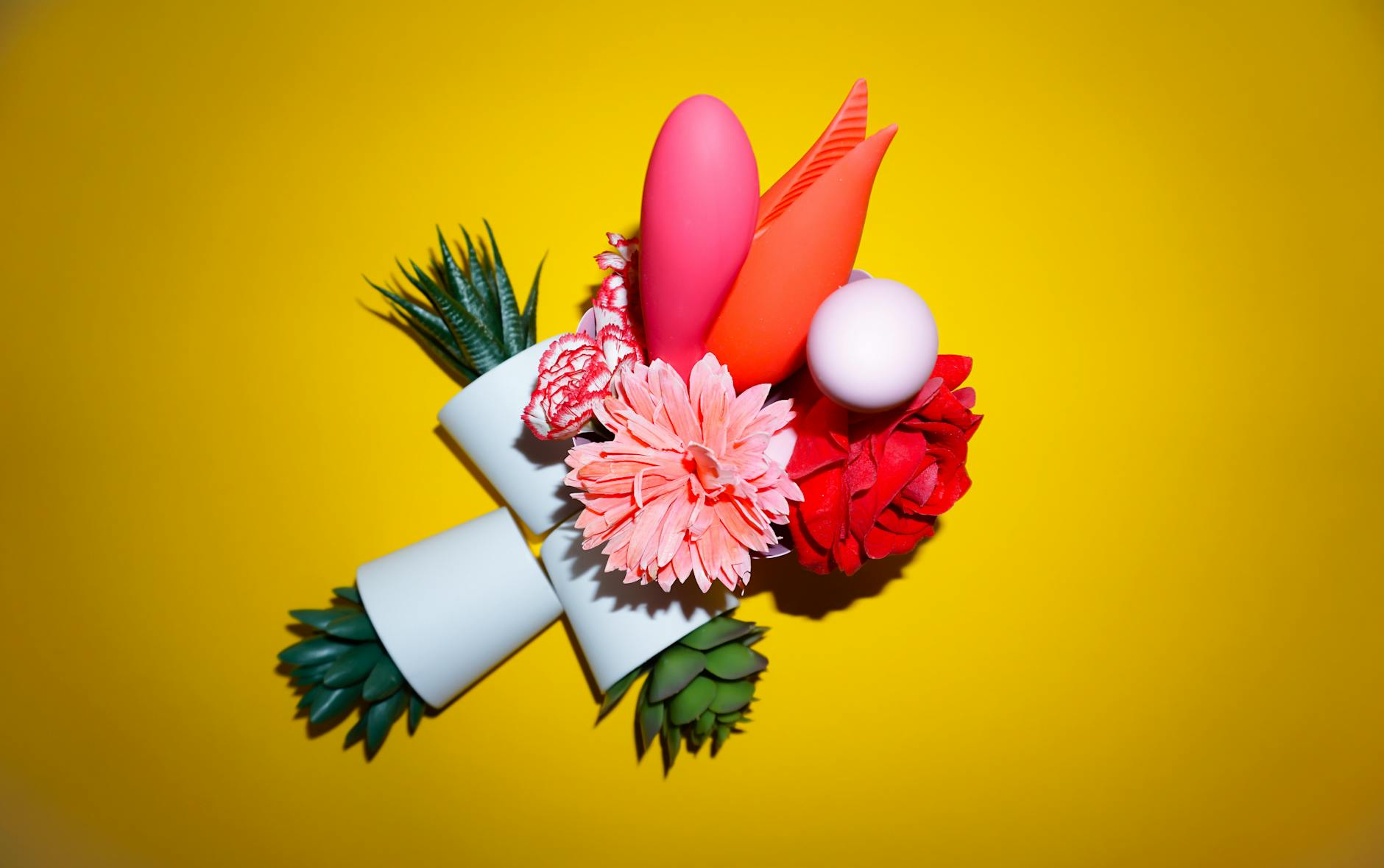
The honest truth about desire and distance
Let's be real. When your partner travels constantly, sex isn't just complicated. Your entire rhythm changes. The spontaneity disappears. Your body doesn't know when to expect touch, when to anticipate arousal, or how to stay connected to desire when you're in separate time zones.
But here's the thing nobody tells you: this is exactly when lemon vibrators become most valuable. Not as a replacement for your partner, but as a bridge. A way to keep your own pleasure alive, your sense of sexual self intact, and the actual conversation between you and your partner open and honest.
Why frequent travel disrupts intimacy
It's not just the missing sex. When someone is away regularly, your body goes into a different state. Cortisol stays higher. Your nervous system doesn't fully relax. The anticipation that used to build now just... flatlines. You stop initiating. You stop thinking about sex. Your partner stops too. And suddenly what was a vibrant part of your relationship becomes another thing you're both too tired for.
Here's the research part: couples with frequent separations report a 23% decline in reported sexual satisfaction within the first six months, according to studies on military and traveling professional relationships. But the couples who actively maintained solo pleasure practices? They reported no decline at all. That's not coincidence. Maintaining your own arousal capacity directly protects your couple's sexuality.
Lemon vibrators matter here because they're specific. They work fast. They require minimal setup. When your partner is three time zones away and you've got 20 minutes before work, a clitoral vibrator like the Lem gives you access to your own pleasure without the pressure of coordinating with someone else's schedule.
Solo play keeps desire alive when your partner is gone
This is the part that feels counterintuitive but is actually foundational. Using lemon adult toys on your own isn't a replacement for partnered sex. It's maintenance.
When you're alone and your partner is traveling, your body still needs sexual activation. You still need that neurochemical release. You still need to know that your own pleasure mechanism works. If you let that atrophy while your partner is gone, by the time they return, you have to rebuild arousal from zero. It's exhausting for both of you.
Using a lemon vibrator 2-3 times per week while your partner travels does three specific things. First, it keeps your nervous system calibrated to pleasure. Second, it maintains your clitoral sensitivity and responsiveness. Third, it gives you actual data about what feels good right now, which you can bring back into partner sex when they return.
Many of my clients tell me that solo play with the Lem while their partner is away actually makes the reunion sex better, not worse. Because you're not approaching it from a place of "please let me remember how to feel this." You're approaching it knowing exactly what you like.
How to build a solo routine around travel schedules
The key is consistency, not intensity. You're not trying to have the best solo orgasm of your life. You're maintaining a baseline.
If your partner travels Monday through Thursday every other week, mark those nights as non-negotiable you-time. Don't make it a consolation prize or a way to "pass the time." Make it a date with yourself. Some of my clients set the same time each night. Others pick nights that feel natural. The rhythm matters more than the specific timing.
Start with 15-20 minutes. A lemon vibrator works fast, so you're not looking at hour-long sessions. Warm up first. This isn't rushing. Put on something that makes you feel sexy, even if it's just your own voice in your head. Touch yourself for a few minutes before you even reach for the toy. Then use the Lem or whatever lemon sexual toy resonates with you. Some people like the lowest settings to start. Others go straight to medium.
The goal isn't always orgasm. Sometimes it's just remembering that pleasure exists and that your body can access it independently.
Sharing what you've discovered with your partner
Here's where this gets relational instead of just transactional. The whole point of solo practice is so you can bring it back into connection.
When your partner returns from travel, talk about it. Not in a clinical way. Just "I found something that felt really good" or "My body is responding differently these days, and I want to show you." Then actually show them. Use your lemon vibrator together. Let them see what turns you on, what speed works, what rhythm gets you there faster.
This does two things at once. You get to keep the pleasure pathway you've built alone. And your partner gets to step back into your sexuality with actual information instead of guessing.
Many couples discover that partnered use of clitoral vibrators is completely different from solo use. Your partner might use the toy on you in ways you hadn't tried alone. The psychological element of being watched or guided changes the sensation. This is data. This is connection.
When video intimacy fits into this picture
Some long-distance couples maintain video intimacy while traveling. Some don't. Neither is wrong.
If you do video sex while your partner travels, lemon vibrators work well because they're quiet, fast, and not complicated. But here's what I see go wrong: couples start treating video sex as a replacement for their own solo practice, and then the pressure mounts. Now you're coordinating time zones, managing camera angles, and trying to orgasm on schedule. That's the opposite of maintenance.
If video intimacy works for you, great. Do it. But also keep solo play happening separately. One doesn't replace the other.
Managing the guilt and the expectations
Almost every client I work with who uses vibrators during their partner's absence mentions guilt. "Is this cheating?" "Should I be waiting for them?" "Am I making myself less interested in them?"
None of that is true. Your own pleasure is not infidelity. Your own pleasure is self-care. It's relationship maintenance. It's actually the opposite of resentment-building.
If your partner is uncomfortable with you using lemon vibrators solo, that's a conversation worth having. Not because you need permission, but because the discomfort usually points to something underneath. Fear that they're not enough. Insecurity about distance. Anxiety about what solo play means. Those feelings are real and they're worth addressing. But the solution isn't avoiding your own pleasure. The solution is talking about what's actually scared.
When your partner returns, you're not starting from zero
This is the whole payoff. After two weeks of your partner traveling, a typical couple comes back together and has to rebuild arousal, rebuild connection, rebuild rhythm. It's a slog.
If you've kept your own pleasure practice alive, your body already knows how to access arousal. Your clitoral sensitivity is still responsive. Your nervous system hasn't forgotten that pleasure exists. So when your partner returns and you're together, you can go from zero to aroused much faster. The reunion sex doesn't have to be a chore. It can actually be great.
Lemon vibrators aren't substitutes for your partner. They're the thing that keeps you ready for your partner.
People also ask
Is it okay to use lemon vibrators while my partner travels if they don't know about it?
That depends on your relationship agreements. Some couples have explicit conversations about solo play while traveling. Others don't. The key is whether there's deception. If you and your partner have agreed to transparency and you're hiding it, that's worth examining. But using a clitoral vibrator on your own while your partner is away isn't inherently a betrayal. Your body and your pleasure belong to you, full stop. That said, the most resilient long-distance relationships are the ones where partners talk openly about how they're maintaining sexuality during separation.
Will using a lemon vibrator solo make reunion sex feel less intense?
No. Actually the opposite. If anything, maintaining your own arousal capacity makes reunion sex better. You're not trying to come back online sexually after weeks of nothing. Your body is already responsive. You already know what feels good. You bring that knowledge into partnered sex, which makes it easier to get aroused together, which makes the actual sex more satisfying for both of you.
How often should I use my lemon sexual toy while my partner is away?
There's no magic number. The goal is consistency, not frequency. Two to three times per week during travel weeks works well for most people. Some use it nightly. Some use it once a week. What matters is that it's regular enough that your nervous system stays calibrated to pleasure. If you go weeks without any touch or arousal, reunion sex requires rebuilding from scratch, which is frustrating for both of you.
Can my partner use the lemon clitoral vibrator on me during video sex?
Sortof. A lemon vibrator is a physical object, so they can't actually control it remotely unless it's a toy with Bluetooth capability (most of Nancy's Lems Shop offerings don't have that feature). What works better is you having control and them watching, or you describing what you're doing while you use the toy. The mental connection is usually hotter than trying to choreograph a physical object across distance.
What if my partner is threatened by me using lemon vibrators while they're away?
That's a legitimate concern worth addressing directly. The threat usually comes from one of three places. Either they feel replaced, they're insecure about the distance, or they have deeper beliefs about sexuality that make solo play feel wrong to them. Have the conversation. Listen. Share your perspective. Explain that you're maintaining your own pleasure, not replacing them. If they're still not comfortable, you have a choice to make about whether you want to honor that boundary or whether you need to prioritize your own sexual health. Both are valid. But compromise usually looks like honest conversation, not just hiding it.
Is a lemon sucker or lemon vibrator better for solo play during travel?
Lemon vibrators are typically faster and easier for solo use because they require less technique and build arousal more directly. A clitoral vibrator like the Lem works with your body's natural responsiveness. Suction toys are excellent, but they require more intentional positioning and usually take longer to reach orgasm. For maintenance sex during travel weeks when time is tight, a standard lemon vibrator is usually the better choice.
The bottom line
Frequent travel tests relationships. It tests your resilience, your commitment, and your ability to stay connected across distance. But it doesn't have to kill your sexuality. Using lemon vibrators and lemon clitoral toys to maintain your own pleasure while your partner is away isn't infidelity. It's not settling. It's actually the foundation for better reunion sex and a healthier long-term sexual connection.
Your pleasure matters whether your partner is home or away. Treating it like maintenance, like something worth protecting and nurturing, is how you keep desire alive across the distance. When your partner returns, you're not starting from zero. You're ready. Your body knows how to feel good. And that changes everything.
If you're navigating long-distance intimacy and want to talk through how to keep sexuality alive during travel, reach out. That's what I'm here for.
References & Sources
- Stafford, L., Merolla, A. J., & Castle, J. D. (2006). "When long-distance dating partners become geographically close." Journal of Social and Personal Relationships, 23(6), 901-919.
- Maguire, K. C. (2007). "Will it ever end? Long-distance relationships maintenance strategies and outcomes." Journal of Family Communication, 7(4), 338-357.
- Jiang, L. C., & Hancock, J. T. (2013). "Absence makes the communication grow fonder: Geographic separation, mediated communication, and relationship satisfaction." Journal of Communication, 63(3), 556-577.