
Here's the thing about bringing toys into a new relationship
Most people assume the hard part happens in the bedroom. It doesn't. The hard part is the conversation before. Get that right, and everything else unfolds naturally. Get that wrong, and you've created an awkward tension that lingers for weeks.
I've worked with hundreds of couples navigating this exact moment. The ones who succeeded had one thing in common: they separated the logistics from the emotion. They didn't make it about "fixing" anything or "proving" anything. They made it about curiosity and pleasure, together.
Let me walk you through how to do this with a lemon vibrator, whether you're thinking about the Lem or exploring clitoral vibrators for the first time as a couple.
The pre-conversation conversation
Don't announce this in the middle of intimacy. That's a setup for defensive reactions.
Instead, bring it up during a calm moment. Not during sex, not right before bed, not when either of you is stressed about work. Aim for a Saturday afternoon conversation over coffee, or a drive together. Somewhere neutral where you can both speak without performing.
Start with honesty about yourself, not about them or the relationship. Something like: "I've been thinking about trying something new in the bedroom, and I wanted to talk to you about it first." That's it. No apologies, no over-explanation.
Their first response might be confusion, curiosity, or defensiveness. All are normal. Your job is to listen, not convince.
What to actually say
Most people fumble here because they're trying to hit too many things at once. Simplify it.
The what: "I'd like to try using a clitoral vibrator. Something like a lemon vibrator. Have you heard of those?"
The why: "I'm curious what it feels like, and I think it could feel good for me. I'm also interested in exploring this with you rather than alone."
The openness: "I don't know if we'll love it. We might try it once and decide it's not for us. Or we might find we really like it. Either way, I wanted to check in with you first."
Notice what's missing: you're not saying "I need this," "You're not enough," "This will fix our sex life," or "Most people do this." Those are pressure tactics, even when unintentional. You're saying: curiosity, willingness to explore together, flexibility about the outcome.
What to listen for
Your partner might say yes immediately. Great. They might also say:
"I'm worried it means I'm not enough." This is the most common response, and it's important. Pause and address it directly: "That's not what this is. This is about me exploring what feels good to my body. It has nothing to do with you or what you do or don't do. I want to do this with you because I want to share it with you."
That distinction matters. Toys aren't replacements for partners. They're tools that can enhance what already exists between you.
"I'm not sure what that would look like." Perfect. That's a sign they're interested but need more information. Offer to show them pictures or videos. Let them see that lemon vibrators look like, well, lemons. They're not intimidating. They're small, portable, and aesthetically inoffensive.
"I need to think about it." Honor that. Don't push. Give them a few days, then circle back. Sometimes people need time to sit with new ideas.
"I'm not comfortable with that." This is valid too. Ask why. Is it the toy itself, the idea of toys in general, a past experience, a belief they hold about sex, or something else? Understanding the real barrier is the only way forward.
The practical setup
Once you've both agreed to try, plan it. Don't improvise this.
Decide together what night, what time, and what preparation you both need. Some people want to shower first. Some want wine. Some want to start with other touch before introducing the toy. All of these are fine. The point is: you've both thought ahead. You're both settled. You're both present.
When you're actually in the moment, one person should be in control of the toy at first. Usually, that's the person using it. If you're exploring a lemon clitoral vibrator on your own body while your partner is present, start at the lowest setting. Show them where it feels good. Narrate what you're experiencing: "The suction feels warm here," or "This pattern is stronger than I expected." This removes the mystery and invites them into the experience rather than making them a spectator.
If your partner wants to use the toy on you, that's different territory and deserves a separate conversation. Make sure you're both clear about pressure, speed, and what "stop" looks like.
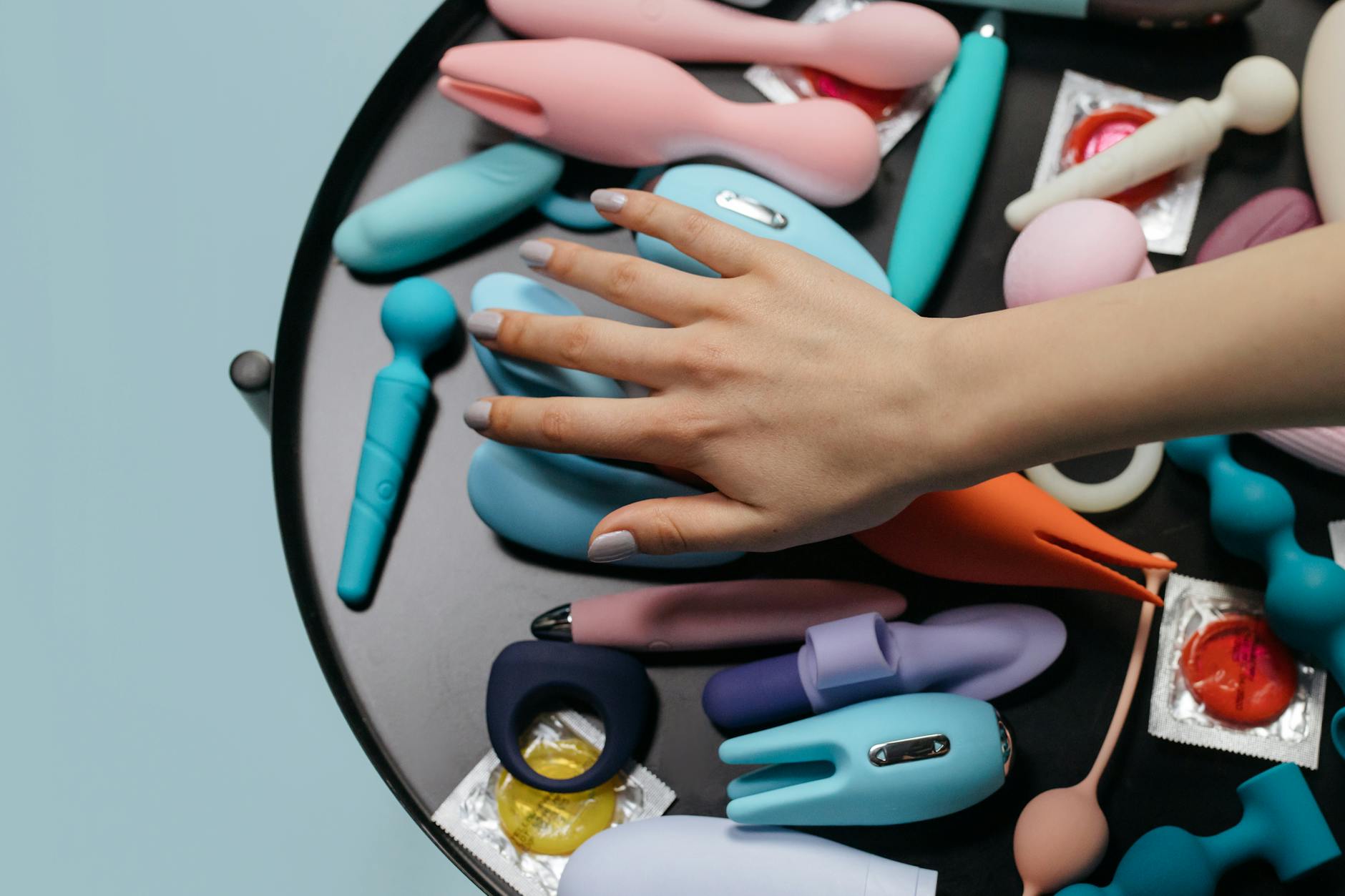
Photo by cottonbro studio on Pexels
What happens after the first time
Maybe it was amazing. Maybe it felt weird. Maybe nothing happened because you were both in your heads. All of these are completely normal outcomes.
The second conversation matters as much as the first. The next day, when you're both calm and clothed, check in: "So how did that feel for you?" Give them space to be honest. If they felt disconnected or uncomfortable, that's data. If they loved it, that's also data.
You might find that lemon vibrators aren't your thing, and that's fine. You've learned something. You might find you want to incorporate them regularly. You might find that you enjoy them but only occasionally. None of these is wrong.
What matters is that you've created a framework for exploring pleasure together without shame. That framework is useful far beyond toys.
How this affects intimacy over time
One thing I've observed in my practice is that couples who navigate toy conversations successfully often report feeling closer afterward, not because of the toy itself, but because they've had a real conversation about desire.
Most couples never do this. They never sit down and say, "Here's what I want. Here's what I'm curious about. What about you?" They assume they know. They're often wrong.
A clitoral vibrator becomes a gateway to deeper communication. You're not just introducing a device. You're establishing that pleasure matters, that curiosity is okay, and that vulnerability between partners is safe.
That ripples into everything.
When to get a professional perspective
If your partner has a strong, persistent fear around toys or sexuality in general, that might signal something worth exploring with a therapist together. Shame around pleasure, past sexual trauma, or rigid beliefs about what sex "should" look like are real things that respond well to professional support.
You don't need a therapist to use a lemon vibrator. But if the conversation about toys becomes a conversation about deeper disconnection or fear, bringing in a specialist can help you both move through it.
Similarly, if you're in an early relationship and your partner refuses any conversation about your pleasure or curiosity, that's information too. That's a signal about how they respond when you're vulnerable and ask for something. Pay attention to that.
The short version
Talk first. Be honest. Listen. Plan ahead. Start slow. Check in after. Repeat as needed. That's the whole thing.
Clitoral vibrators aren't complicated. New relationships are. But this conversation, done well, actually simplifies things. You're saying: I trust you. I want to explore pleasure with you. I want to know what you think and feel. That's intimacy.
FAQ: New partners and lemon vibrators
Q: Is it weird to bring up toys this early in a relationship?
A: There's no universal timeline. If you're at the point where you're having regular sex and thinking about what else feels good, you're at the point where this conversation is appropriate. If you've been together for two weeks, maybe wait. If you've been together for six months, it's definitely fair game.
Q: What if my partner thinks I've used toys with exes?
A: That's a separate conversation. If they ask, be honest. If they bring insecurity into that, listen without defending. You might say: "My past is separate from what I want to explore with you." But don't volunteer information that wasn't asked for. Let them ask the questions they need to ask.
Q: Should I use a lemon vibrator solo first, or experience it together?
A: Either is fine. Some people prefer to understand their own body's response first, then introduce their partner. Others want the experience to be entirely shared. What matters is what feels right to you both.
Q: What if they want to use it on me and I'm nervous?
A: Say so. "I want to try this, but I'd feel more comfortable exploring it on my own body first. Once I get used to it, we can explore together." That's perfectly reasonable. Setting boundaries around how and when toys are used protects the experience for both of you.
Q: Can using a lemon clitoral vibrator change what I like or need?
A: No. A vibrator is a tool. It doesn't rewire your sexuality. It might help you discover what kind of stimulation feels best, but that's information about you, not a change in who you are.
Q: What if they like it more than I do?
A: Then you've learned something. Some partners are more enthusiastic about toys than others. That's okay. You can use it when you both want to without pressure to use it every time.
Moving forward
Bringing a lemon clitoral vibrator into a new relationship is actually a moment of deepening. You're saying: my pleasure matters. Your perspective matters. Let's figure this out together.
That conversation, more than the toy itself, is what changes things. If you need more guidance on how to talk to partners about pleasure, sensuality, or intimate communication, reach out to us at Hello Nancy or explore our buying guide for more context on different tools.
Your new relationship deserves this kind of honesty. You both do.