Let's start with the thing nobody says out loud
Your body in your 40s is not your body at 25. That's not a loss. It's information. And the way you use lemon vibrators, explore pleasure, and think about intimacy shifts with it. Most of what gets written about pleasure after 40 swings between two unhelpful poles: either everything gets worse, or you're supposed to pretend nothing changed. I'm here to tell you the actual truth, which is far more interesting.
After two decades of working with couples navigating midlife transitions, I can tell you this: the people who stop treating their pleasure as static and start treating it as something worth understanding often report that their 40s, 50s, and beyond are the best years of their sexual lives. That doesn't happen by accident.
What actually changes in your body after 40
Here's the physiological part, and then we'll get to what it means.
Tissue sensitivity shifts. Blood flow patterns change slightly. Recovery time after orgasm extends (which is fine, and often lets you sit with the sensation longer). If you're approaching or in perimenopause, hormonal fluctuations affect arousal buildup, lubrication, and how intense stimulation feels. Your pelvic floor muscles may have less elasticity. This is all normal, all common, and all manageable.
What doesn't change: your nerve endings. Your brain's capacity for pleasure. Your clitoral sensitivity or your ability to orgasm, often more intensely than before.
The Lem and other lemon clitoral vibrators work particularly well for bodies after 40 because air-suction technology bypasses some of the friction issues that come with thinner tissue. You get stimulation without the mechanical pressure that can feel raw or uncomfortable.
Why pleasure often gets better, not worse
I see three patterns consistently across my practice.
You know your body. At 25, you're often still figuring out what you like. By 40, you've usually done the work. You know what doesn't work. You've eliminated the partners, the positions, the speeds that never landed. That knowledge alone transforms the experience.
You have less to prove. The social pressure to perform pleasure, to perform arousal, to reach orgasm on someone else's timeline loosens. For a lot of people, especially women, that permission alone opens doors that have been locked for years. You're not working toward anyone's expectation but your own.
Your nervous system knows what feels safe. Arousal isn't just physical. It lives in your nervous system. By 40, you've developed ways to self-soothe, communicate your boundaries, and ask for what you need. That capacity to regulate yourself actually makes it easier to relax into pleasure. And relaxation is where all the good stuff lives.
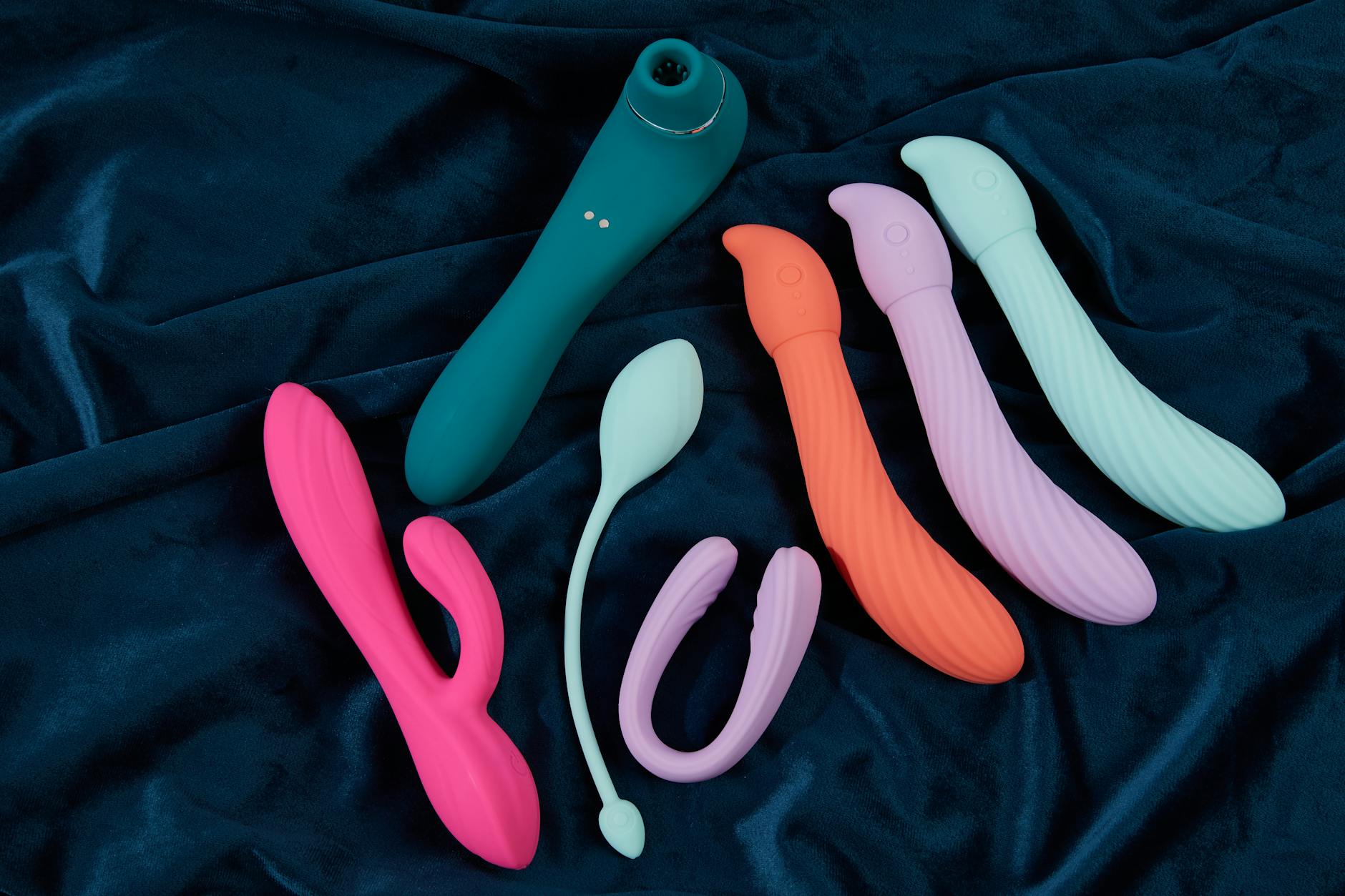
Photo by IFONNX Toys on Pexels
How to use lemon vibrators differently as you get older
If you've used vibrators before, you might need to adjust your approach. That's not a step backward. It's just responsiveness.
Start slower. Patterns 1 through 3 on the Lem give you a wider range of sensation than jumping straight to intensity 5. Your tissues warm up faster with gentler stimulation anyway, and you build arousal more evenly. Most people find that taking their time actually leads to stronger orgasms, not weaker ones.
Warm up longer. Give yourself 20 to 30 minutes of foreplay, alone or with a partner. This isn't a penalty. It's an extension of the good part. Your arousal ramps up at its own pace, and rushing it often means the sensation plateaus halfway through. Patience actually changes the intensity of the final climax.
Lubrication is not optional. Use a water-based lube. I don't say this because you're broken or because something is wrong with your body. I say it because lube amplifies sensation. It reduces friction. It lets you feel more nuance in the stimulation. Plenty of people in their 20s use it too. After 40, it just makes things easier.
Listen to your pelvic floor. If you've done pelvic floor exercises (Kegels), keep doing them. But also practice the opposite: relaxing your pelvic floor fully. A lot of tension builds there as we age, and it blocks sensation. Learning to soften while using a lemon clitoral vibrator often unlocks a different kind of pleasure response.
The mental part (which is often bigger than the physical)
Something I notice constantly in my practice: people conflate a shift in their body with a loss of desire. These are not the same thing.
If you're in a long-term relationship, midlife often brings other stressors: career changes, aging parents, kids launching or struggling, unresolved resentment from years back. All of that lives in your nervous system and shows up as flatness in arousal. That's not a vibrator problem. That's a conversation problem. And the conversation needs to happen separate from the bedroom.
If you're single, you might be carrying internalized beliefs that your body is less desirable now. That's worth interrogating. The person I was at 25 was not better at pleasure than the person I am now. She was just less aware of what she wanted.
The lemon vibrators and lemon sexual toys from Hello Nancy are designed to work with your body as it is, not fight it. That's the whole point.
When to see a doctor
If you experience pain during sex, don't wait to see a specialist. Genitourinary syndrome of menopause (GSM) is real and treatable. So is vaginismus, which can show up after 40 due to hormonal shifts, tension, or psychological factors. A menopause-trained GP or gynaecologist can help in weeks.
If your desire has tanked completely and you suspect hormonal issues, testosterone therapy is worth discussing with your doctor. It's prescribed more conservatively in some regions than others, but it's available and often transformative.
If you're not sure whether something is normal, ask. That's what a healthcare provider is for.
When it's worth exploring a new lemon clitoral vibrator
You don't need a new toy just because you're older. But you might benefit from one if.
Your old vibrator uses bullet or wand technology that now feels too intense or too buzzy. Air-suction lemon vibrators distribute stimulation differently and often feel gentler while delivering more sensation. If you've never tried one, your 40s might be the perfect time.
You've been using the same toy for years and your body has adapted to it. Introducing a different sensation pattern can reset your responsiveness. That's not boredom. That's neuroscience.
You want something specifically designed for the changes your body is actually experiencing. The Lem clitoral vibrator and other adult toys from Hello Nancy are engineered to work well across different body types and tissue sensitivities.
Your partner wants to explore this with you, and you want something you can both feel comfortable with. That's a good reason too.
People also ask
Is it normal for pleasure to feel different after 40?
Completely normal. Your body changes, your nervous system develops, your desires evolve. Different doesn't mean diminished. Many people report stronger, more focused sensations after 40 than they had earlier. You're not losing sensitivity. You're gaining specificity.
Can I use the same vibrator I've always used, or do I need to switch?
You don't need to switch. But if your current vibrator doesn't feel as good as it used to, or if it causes discomfort, trying something new makes sense. Lemon clitoral vibrators like the Lem work particularly well if you're dealing with tissue sensitivity or if you want a different kind of stimulation. No obligation, just options.
How much lubrication do I actually need with a lemon vibrator?
Enough that the toy glides smoothly without dragging. Water-based lube warms to your body temperature, so a little goes a long way. You might need to reapply halfway through depending on your body. That's normal and fine.
Does using a vibrator get harder as I get older?
Not harder, just sometimes different. You might need a longer warm-up, a lighter touch to start, or a partner's involvement if you're exploring alone. If you've used lemon sexual toys before, your body already knows the general sensation. You're just fine-tuning it for where you are now.
What if my partner is uncomfortable with toys?
That's a conversation worth having outside the bedroom. Often, discomfort comes from insecurity or cultural messages about what sex "should" look like, not from the toy itself. A good conversation centers on what you need, not on convincing them. Sometimes they come around. Sometimes you find a compromise. Sometimes you decide it's not compatible. All of those are okay outcomes.
Is it true that lemon vibrators are better for sensitive skin?
Lemon clitoral vibrators tend to be gentler because air-suction technology doesn't rely on friction the way bullet or wand vibrators do. If you have sensitive skin or tissue, they're often a good choice. But sensitivity varies person to person, and what works for your friend might not work for you. The Hello Nancy site has resources to help you find the right lemon vibrator for your body.
The truth at the bottom of this
Your body after 40 is not a downgrade. It's a different model with different features. Some things feel better. Some require more attention. Most of what you've been told about pleasure declining with age is not science. It's cultural baggage.
The people I see in my practice who have the best intimate lives in their 40s, 50s, and beyond are not the ones with the youngest bodies. They're the ones who got curious about their own pleasure, who communicated clearly with their partners, and who gave themselves permission to explore without shame.
A good lemon clitoral vibrator is a tool. But the real work is the permission piece. Once you have that, everything else follows. Your body knows what to do. It's been doing it your whole life. You're just finally paying attention.