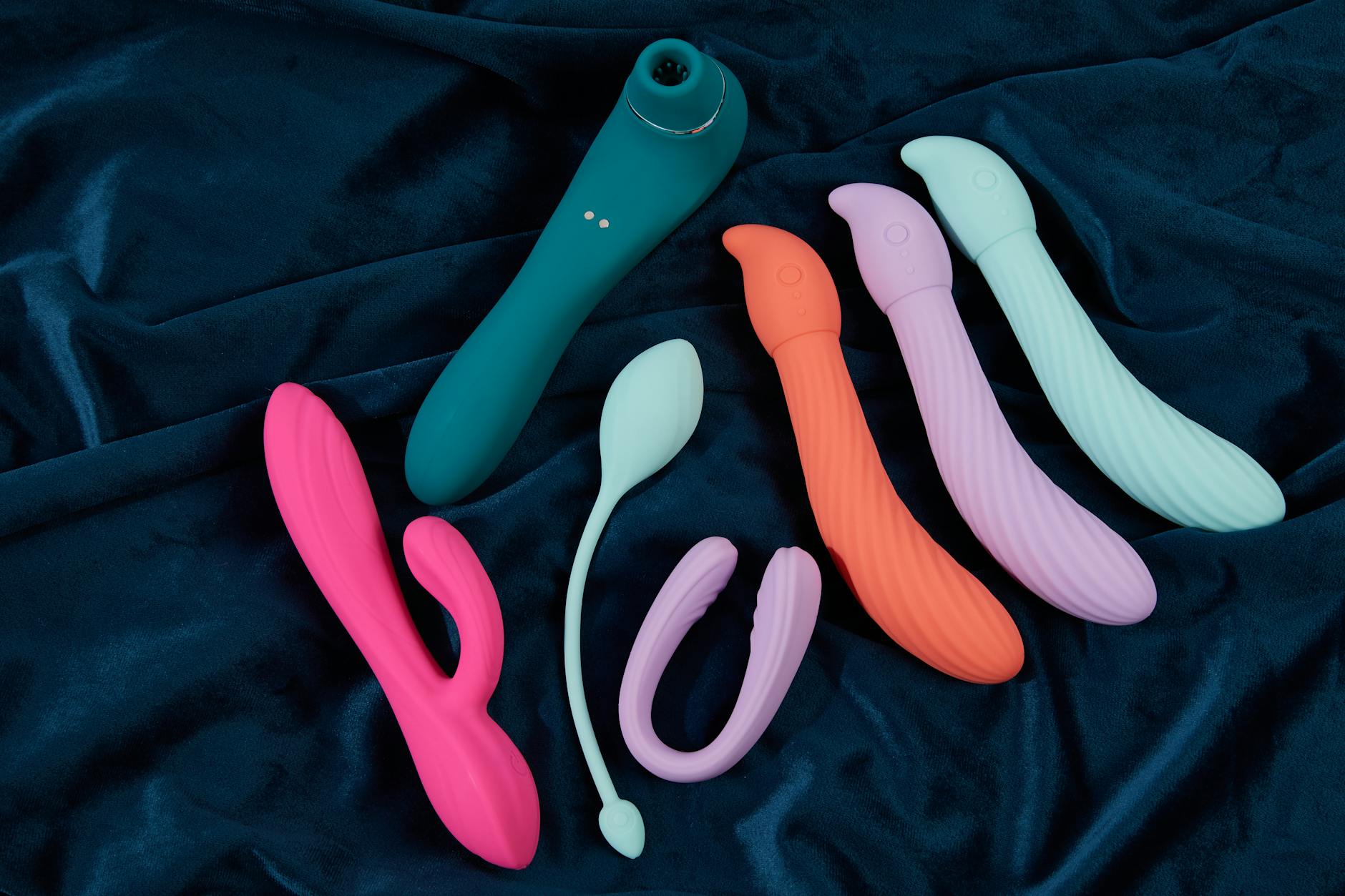
Here's the thing about vibration vs. suction
You've probably used a traditional vibrator. You know that constant buzz feeling, the one that sometimes feels good and sometimes feels like someone's holding your phone against your skin. That's straight vibration, and it works for plenty of people. But if you have clitoral sensitivity, numbness, reduced sensation, or just find that traditional vibration feels numb or overwhelming, the reason isn't that you're broken. It's that your nervous system is responding to the wrong stimulus.
Lemon vibrators work differently. They use suction, not vibration alone. This creates a fundamentally different sensation, and for sensitive bodies, it's often far more effective.
How traditional vibrators actually stimulate
A standard vibrator creates pleasure through mechanical oscillation. The device moves back and forth at a set frequency, usually somewhere between 80 and 10,000 cycles per minute depending on the toy. This constant, rapid movement stimulates nerve endings through friction and tissue displacement.
Sounds good on paper. The problem: clitoral tissue is delicate. If you have sensitive skin, thinned tissue from hormonal changes, or naturally higher nerve density in the clitoral area, that constant buzz can feel irritating rather than pleasurable. Some people describe it as numbing. Others say it's too intense, too one-note, or even painful.
The clitoris has roughly 8,000 nerve endings concentrated in a tiny area. They're not all the same type. Some respond to pressure, some to temperature, some to gentle sustained stimulation. A one-speed vibration pattern can't hit all of them well.
What suction actually does differently
Lemon clitoral vibrators work by creating gentle suction and release cycles. Instead of buzzing, they draw the clitoral tissue gently upward, then release. This creates a different chain of stimulation in the nervous system.
Here's the key difference: suction engages a wider range of nerve fibers at once. It's not just surface-level vibration. The gentle pulling sensation stimulates deeper nerve clusters around the clitoris, and it does so with a rhythm that mimics how many bodies naturally respond to stimulation.
For sensitive clitorises, this matters because suction is inherently gentler. You can't accidentally over-stimulate the same way you can with a buzzing device, because the mechanism itself has built-in limits. The suction cycle is rhythmic but not relentless.
Research on air-pulse technology (the mechanism behind lemon vibrators) shows that users with clitoral sensitivity report higher satisfaction and fewer instances of numbness compared to traditional vibration users. That's not a coincidence. The mechanism is literally designed to work with sensitive tissue, not against it.
The texture problem traditional vibrators don't solve
A standard vibrator is basically a motor attached to a case. If you have sensitive skin or thinned tissue, placing that device directly on the clitoris can create micro-friction that, over time, feels less pleasurable and more irritating.
Most people compensate by wrapping the vibrator in a cloth, using it indirectly over underwear, or applying more lube. You shouldn't have to troubleshoot your own pleasure.
Lemon vibrators have a gentler contact point. The suction mechanism means there's less direct friction between the device and your skin. You can use it longer without that overstimulated, raw feeling that sometimes follows traditional vibrator use.
Why sensation range matters for sensitivity
If you have reduced sensation (whether from age, medication, nerve damage, or just natural variation), a standard vibrator often doesn't create enough sensation to register as pleasurable. You end up chasing intensity, turning up the speed, holding it longer, and often still not feeling satisfied.
Lemon clitoral vibrators provide a different entry point. Because suction stimulates deeper nerve clusters, you feel more even at lower intensities. The sensation builds more gradually and feels more distributed across the area, rather than concentrated in one spot.
Many people who switched from traditional vibrators to a Lem describe feeling sensation they didn't know they were missing. Not because their body changed, but because the mechanism was finally matching what their nervous system actually responds to.
The control factor
With a traditional vibrator, your options are usually limited: on or off, sometimes a few speed settings. The experience is binary. Either it's working for you or it isn't.
Lemon vibrators give you more granular control. Most models have multiple intensity settings, letting you dial in exactly what feels right. You can start at a level that feels barely-there and build from there, rather than jumping straight into full-speed buzz.
This control matters for sensitive bodies because it removes the guesswork. You're not trying to adapt your sensitivity to the toy. You're adapting the toy to your body.
Partner dynamics shift too
If you're using toys with a partner, sensitivity comes into play in a different way. Some people worry that needing a certain type of stimulation means their partner is doing something "wrong." It doesn't.
When you switch to a lemon clitoral vibrator, that conversation changes. It becomes "this feels better for my body" rather than "the other thing wasn't working." The shift from vibration to suction is objective, not a personal rejection.
Couples often find that lemon vibrators become more collaborative tools because the sensation is less overwhelming for the receiving partner. You can use it longer, you can be more present during partnered play, and there's less of that numb, exhausted feeling that sometimes follows traditional vibrator use.
You might also find that exploring a lemon clitoral vibrator opens up conversations about sensation preferences more broadly. What does your partner not know about what actually feels good for you?
The science of why some bodies prefer suction
There's a reason medical devices for clitoral sensitivity often use suction-based mechanisms. It's not marketing. The mechanism engages the parasympathetic nervous system more effectively than vibration alone.
When you experience suction stimulation, your body registers it as a different type of touch. Rhythmic suction mimics aspects of manual stimulation in a way that pure vibration doesn't. Your nervous system literally processes it as a more "natural" sensation, which means arousal builds more naturally, orgasm arrives more reliably, and the overall experience feels less mechanical.
For people with anxiety around pleasure, this matters. A lemon vibrator can feel less clinical, less like a device and more like a tool that actually aligns with how your body wants to be stimulated.
When sensitivity changes over time
Your clitoral sensitivity isn't static. Hormonal shifts, age, medication changes, stress levels, and pelvic floor tension all affect how you respond to stimulation.
If you're noticing that traditional vibrators aren't hitting the same way they used to, a lemon clitoral vibrator might be the solution. It's not that your body broke. It's that your sensation needs have shifted, and a different mechanism is better suited to meet them.
Many people try a lemon vibrator expecting it to feel "not as strong" and are surprised to find it feels more pleasurable. That's because strength and sensation aren't the same thing. You don't always need more intensity. You need the right type of stimulation.
Practical setup for sensitive bodies
If you're sensitive to clitoral stimulation, here's what actually works. Start with your lemon vibrator on the lowest setting. Many people find that the suction-release rhythm feels good at low intensity in a way that high-intensity buzz never does.
Use a water-based lubricant if you want additional glide, but many people find lemon clitoral vibrators work beautifully without lube because the suction mechanism is gentler on skin.
Budget time. Suction-based stimulation often builds more slowly than vibration, but it also builds more reliably. What felt like taking forever with a traditional vibrator might feel like perfect pacing with a lemon clitoral vibrator.
If you're exploring this with a partner, start solo first. Get comfortable with how your body responds to suction before adding another person's expectations into the mix.
Why Hello Nancy focuses on this mechanism
Lemon vibrators aren't trendy. They're engineered for bodies that vibration alone doesn't serve well. That's who Hello Nancy designs for. Not everyone needs a lemon vibrator. But if traditional vibrators have never quite worked the way you hoped, or if you're sensitive and tired of having to modify your pleasure, it might be exactly what you've been looking for.
The clitoris deserves a tool that's designed for how it actually works, not a universal solution that leaves sensitive bodies scrambling to make it fit.
People also ask
How is a lemon vibrator different from a regular vibrator?
Lemon vibrators use suction-and-release cycles instead of continuous vibration. This engages different nerve clusters and creates a sensation closer to manual stimulation. For sensitive bodies, suction feels gentler and often more effective than buzzing alone. Most people find they can use a lemon vibrator for longer periods without the numbing sensation that sometimes comes with traditional vibrators.
Do lemon clitoral vibrators work for everyone?
No, and that's fine. Some people prefer the straightforward intensity of traditional vibration. Lemon vibrators work especially well for people with clitoral sensitivity, reduced sensation, anxiety around pleasure, or bodies that respond better to rhythmic suction than constant buzzing. If you're not sure, start with the lowest intensity setting and give yourself time to feel how your body responds. Sensation preferences are personal.
Can you use a lemon sucker if you have numbness?
Yes, actually. Because lemon clitoral vibrators stimulate deeper nerve clusters through suction, many people with reduced sensation find them more effective than traditional vibrators. You feel more at lower intensities. That said, if you have significant numbness or nerve damage, talk to a healthcare provider about what might be going on. Sometimes numbness is reversible, and sometimes you just need a tool designed for your specific nervous system.
What if a lemon vibrator feels too intense at first?
Most lemon vibrators have multiple intensity settings. Start at the lowest. Suction-based stimulation builds differently than vibration, so what feels gentle at setting 1 might feel perfect after a few minutes. You can also try using it indirectly, over underwear or a thin cloth, until you're comfortable with the sensation. Your body will adapt faster than you think.
Is a lemon clitoral vibrator better than a traditional vibrator?
Not universally. Better depends on your body and what you respond to. For people with sensitivity, reduced sensation, or anxiety around pleasure, lemon vibrators are often superior. For others, traditional vibration is perfect. The point is having options that match how you actually experience pleasure, not forcing your body into a one-size-fits-all tool.
How long does a lemon vibrator last on a charge?
Most lemon vibrators on the market run 60-120 minutes per charge, depending on intensity level. Lower settings last longer. They charge via USB, usually in 60-90 minutes. Check the specs on whatever model you choose. Pro tip: charge before you need it, and keep it on a lower setting for daily use if battery life matters to you.
What to do next
If you're sensitive to stimulation and traditional vibrators have left you frustrated, trying a lemon clitoral vibrator is worth a shot. You don't need to overthink it. Order one, set aside some time when you won't be interrupted, and explore how your body responds to suction instead of buzz.
If you have questions about which model might be right for you or how to get started, reach out. We're here to help you figure out what works for your body, not the other way around. Visit our buying guide or contact Hello Nancy if you want recommendations based on your sensitivity level and preferences.