How to Use Lemon Vibrators for Better Orgasms During Perimenopause and Hormonal Shifts
Here's the thing nobody tells you about perimenopause: your orgasms don't disappear. They change shape. And if you know what's happening under the skin, you can actually work with it instead of fighting it.
I've worked with hundreds of people navigating the 5-10 years before their period stops entirely. The pattern is always similar. Arousal takes longer. Sensation feels muffled. Lubrication is less reliable. And most people assume they've just lost their edge. They haven't. Their neurology is the same. Their capacity for pleasure is the same. What's shifted is the physical environment where pleasure happens.
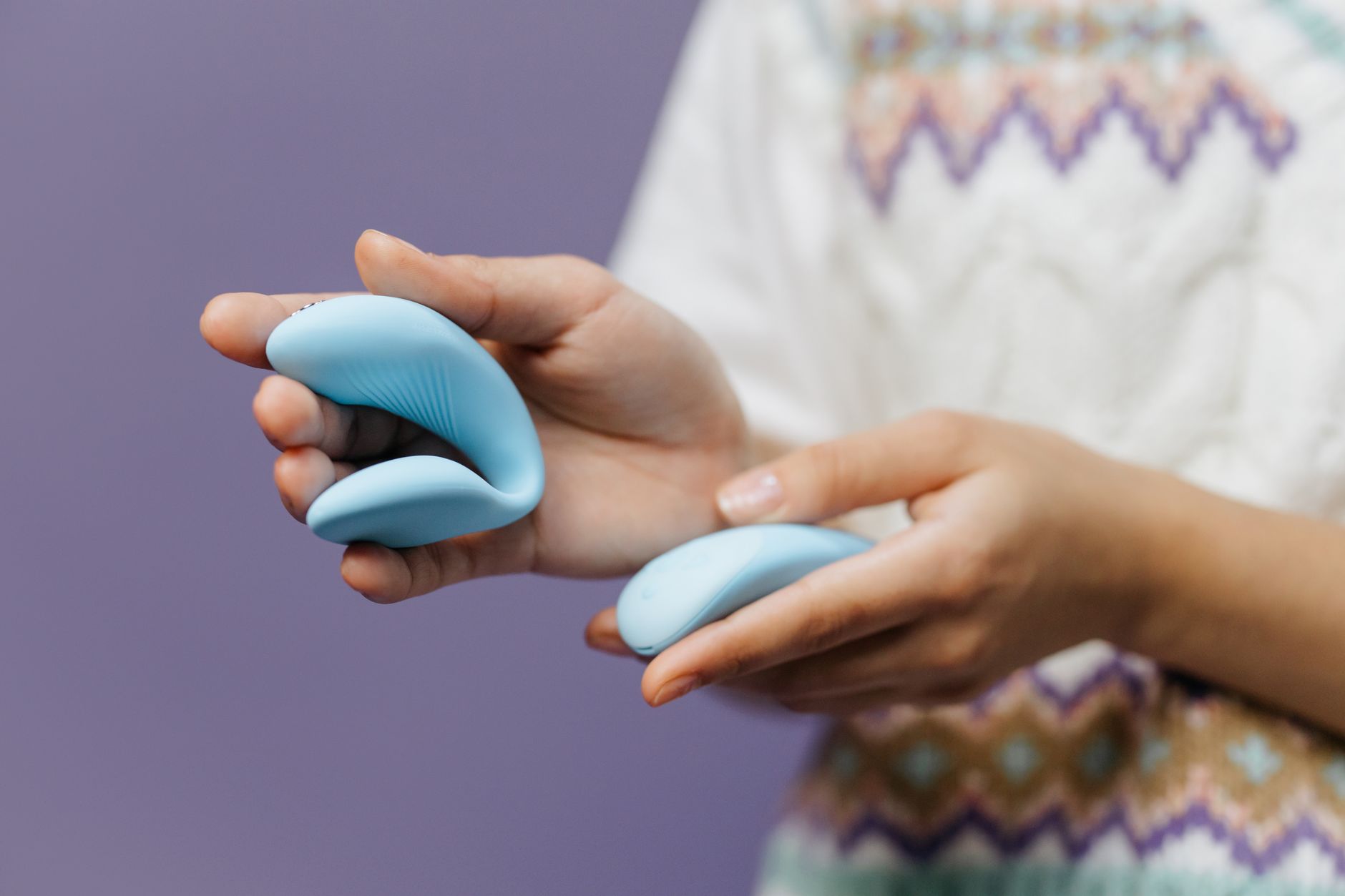
That's where understanding how a lemon clitoral vibrator works becomes genuinely useful. Not as a workaround for a broken system, but as a tool designed for how your body is actually functioning right now.
What perimenopause actually does to arousal
Let's start with the physiology because it matters. During perimenopause, estrogen and progesterone don't just decline. They fluctuate wildly. You might have a week where your brain chemistry feels perfectly normal, then a week where it takes 45 minutes to get aroused instead of 10.
This inconsistency frustrates people more than a simple decline would. Your body isn't broken on a Tuesday and fixed on a Friday. It's unstable. That instability affects three key things.
First, blood flow patterns change. Arousal depends on blood rushing to the clitoris and vaginal tissue. Lower estrogen means less stable blood vessel function. Your clitoris takes longer to engorge and the response is less dramatic. This doesn't mean you can't orgasm. It means the trigger mechanism requires more deliberate input.
Second, tissue thickness shifts. Vaginal and vulvar tissue gets thinner as estrogen drops. This can make direct vibration feel sharper or even uncomfortable. You're not being dramatic if something that felt great last year suddenly feels too intense. Your tissue literally changed.
Third, your baseline arousal threshold rises. Your nervous system needs more stimulation to cross from "not interested" to "interested." This is partly hormonal and partly neurological. The good news: this threshold is moveable with the right approach.
Why lemon suction vibrators outperform traditional vibrators during hormonal shifts
Most vibrators rely on fast oscillation. Buzz, buzz, buzz. That approach works great when tissue is thick and blood flow is stable. During perimenopause, you're often working with thinner tissue and unpredictable arousal, which means direct vibration can overstimulate without actually building pleasure.
A lemon vibrator works differently. The Lem and other air-suction clitoral vibrators use gentle suction and pulsing patterns instead of raw vibration. This matters enormously during hormonal shifts.
Why? Suction stimulates differently than vibration. It draws tissue upward and creates rhythmic pressure rather than constant friction. For people with thinner, more sensitive vulvar tissue, this feels less abrasive. It also works with your body's natural arousal mechanism instead of overriding it. You're not forcing sensation. You're inviting it.
Second, suction responds to your arousal state in real time. As your clitoris engorges, the sensation intensifies naturally. When arousal dips, the sensation softens. This feedback loop actually helps you stay present, which is half the battle when your hormones are unpredictable.
Third, lemon clitoral vibrators usually offer multiple intensity levels and patterns. During perimenopause, consistency matters. You might need pattern 2 on a Monday and pattern 4 on a Thursday. Having options means you're not constantly chasing sensation. You're adapting.
How to adjust your technique based on your cycle
One shift I encourage during perimenopause: stop thinking of "a" technique and start thinking about a toolkit.
If you're tracking your cycle at all, you'll notice your arousal is genuinely different in different weeks. Early follicular phase (the week after your period, if you still have regular ones). High follicular phase (the week leading up to ovulation). Luteal phase (the second half). Each phase has a different neurochemical landscape.
During high follicular, when estrogen is climbing and dopamine is peaked, you might find you can go harder, longer, and with higher intensity. Your baseline arousal is naturally higher. This is when you might use a lemon vibrator at intensity level 4 or 5, or combine it with partner touch.
During luteal, especially the week before menstruation, progesterone is high and dopamine drops. Arousal takes longer to build but often runs deeper once it does. You might need more warm-up time. You might prefer gentler patterns. Pattern 1 or 2 on the Lem, longer foreplay, or a hybrid approach combining the lemon clitoral vibrator with manual stimulation.
The weeks when your cycle is most erratic (which is all of perimenopause, honestly) ask for flexibility. Arousal might not show up the way you expect. Rather than pushing harder, adjust the approach. Switch patterns. Slow down. Add lube. Take a break and come back. The goal isn't forcing an orgasm on schedule. It's reading what your body is offering on that particular day.
The lubrication piece nobody discusses enough
Here's what I see most often: someone assumes they're losing lubrication naturally, so they use less. Then sensation gets worse, so they think their body is broken. Then they give up.
Actually, during perimenopause, your body is producing less lubrication naturally. That's not a sign of broken function. That's a sign you need external lubrication. Full stop.
Water-based lubricant isn't a sign of dysfunction. It's a tool. And it changes everything when you're using a lemon suction vibrator during hormonal shifts.
Lube reduces friction without reducing sensation. It also provides a seal that makes suction more effective. The Lem works best with a small amount of lubricant around the opening. Not inside, not drenched. Just enough to create a gentle seal. This small shift makes the sensation more concentrated and the feedback more responsive to your arousal state.
I also recommend using lube that feels good in your hand and on your skin, not just whatever was cheapest. Good lube is part of the experience. If it feels clinical or sticky, switch brands. Brands like Hyalo or Sliquid are designed to feel natural and to play well with silicone toys.
What to do if sensation still feels flat
Sometimes you do everything right and arousal still doesn't show up the way you remember. This happens. Perimenopause is legitimately hard on sexual response for some people.
If after a few weeks of adjusted technique with your lemon vibrator sensation still feels muted, two things are worth exploring.
First, hormonal therapy. If your fluctuations are severe, talking to a doctor who specializes in perimenopause (many regular OB-GYNs don't) can help. Hormone therapy can stabilize your baseline, which makes everything easier. It's not mandatory. It's an option.
Second, connection work with yourself and your partner if you have one. During perimenopause, a lot of people unconsciously tense their pelvic floor because they're worried sensation won't happen. That tension actually guarantees it won't. Pelvic floor relaxation, breathing work, and sometimes therapy can unlock sensation that's being blocked by anticipatory anxiety, not by actual hormone levels.
And sometimes, honestly, you need to rebuild your relationship with your own pleasure. If you've spent decades calibrating arousal around a partner's timeline, perimenopause can be the moment you realize you never actually learned your own. Using your lemon clitoral vibrator solo, with no goal other than exploration, can be transformative.
Why your age doesn't dictate your pleasure capacity
The cultural narrative says pleasure peaks at 25 and declines from there. That's nonsense, and it's particularly unhelpful during perimenopause when you need accurate information.
Your neurological capacity for orgasm doesn't diminish with age or hormonal change. Your clitoris has roughly 8,000 nerve endings at 25 and 8,000 at 55. That hasn't changed. What changes is the physical and neurochemical context where pleasure happens. That's totally manageable once you understand it.
I've worked with people who had the most profound orgasms of their lives during perimenopause. Not in spite of the hormonal shifts. Sometimes because of them. Once the pressure to perform for a partner dissolves, once the cycles stabilize enough to track, once you give yourself permission to experiment, that's when many people finally explore their own pleasure genuinely.
A lemon clitoral vibrator is part of that conversation. Not because it's magic. But because it's designed for the exact conditions your body is navigating right now. Understanding how to use it is understanding how to work with your own neurology instead of against it.
FAQ: Common questions about lemon vibrators and perimenopause
Can I use a lemon vibrator if my clitoris feels completely numb?
Yes, but start gently. Numbness during perimenopause often comes from tension, not from lost nerve function. A lemon suction vibrator can actually help break that pattern because suction is less triggering to the nervous system than vibration. Start at the lowest intensity and spend time just noticing sensation rather than chasing orgasm. Numbness often improves once you stop striving.
How long should arousal take during perimenopause?
There's no "should." Early in perimenopause it might take 10-15 minutes. Mid-perimenopause, 30-45 minutes. That's not abnormal. That's adaptation. The mistake people make is rushing it or deciding it's not happening because it's different than before. Give yourself a full 20-30 minutes of foreplay and lemon vibrator use before deciding arousal isn't available that day.
Is it normal for orgasms to feel less intense during perimenopause?
Yes. The muscle contractions are usually the same, but they might feel less dramatic because of tissue changes. Some people also find orgasms feel different in texture. Less explosive, more diffuse, sometimes deeper. That doesn't mean they're worse. They're different. Most people actually prefer the texture of perimenopause orgasms once they stop expecting them to match their 30-year-old self.
What if my partner thinks the lemon vibrator is replacing them?
That's a conversation worth having directly. A lemon clitoral vibrator isn't a replacement. It's an adaptation. Many couples find that adding a clitoral vibrator actually improves partnered sex because arousal is more reliable and sensation is more intense. If your partner is resistant, you might read how to introduce lemon vibrators to a partner who thinks toys kill intimacy together.
Can I use a lemon suction vibrator if I have vulvodynia or vestibulitis?
Maybe, but talk to a pelvic floor physical therapist first. Suction is gentler than vibration for sensitive tissue, but only a trained professional can assess whether it's right for your particular situation. Some people with vulvodynia find suction helpful. Others need to wait until tissue is less inflamed. Don't self-diagnose this one.
How often should I use my lemon vibrator during perimenopause?
As often as feels good. Some people use it several times a week. Some use it once a week. There's no standard. More frequent use sometimes helps your nervous system stay in touch with pleasure capacity, but if you're not in the mood, don't force it. Let your body guide the frequency.
What actually changes, what doesn't
Your capacity for pleasure is the same. Your clitoris works the same way. Your orgasm reflex is the same. What changes is the speed, the texture, the physical conditions where pleasure happens. Once you understand that distinction, everything becomes easier.
A lemon vibrator isn't a workaround for a broken system. It's a tool built for your actual body in this actual season of life. Learning to use it well is learning to trust your own neurology again, which is often the most useful skill perimenopause teaches you.
Ready to explore? Start with one of the lower intensity patterns, give yourself real time, and notice what your body is telling you. That feedback is gold.