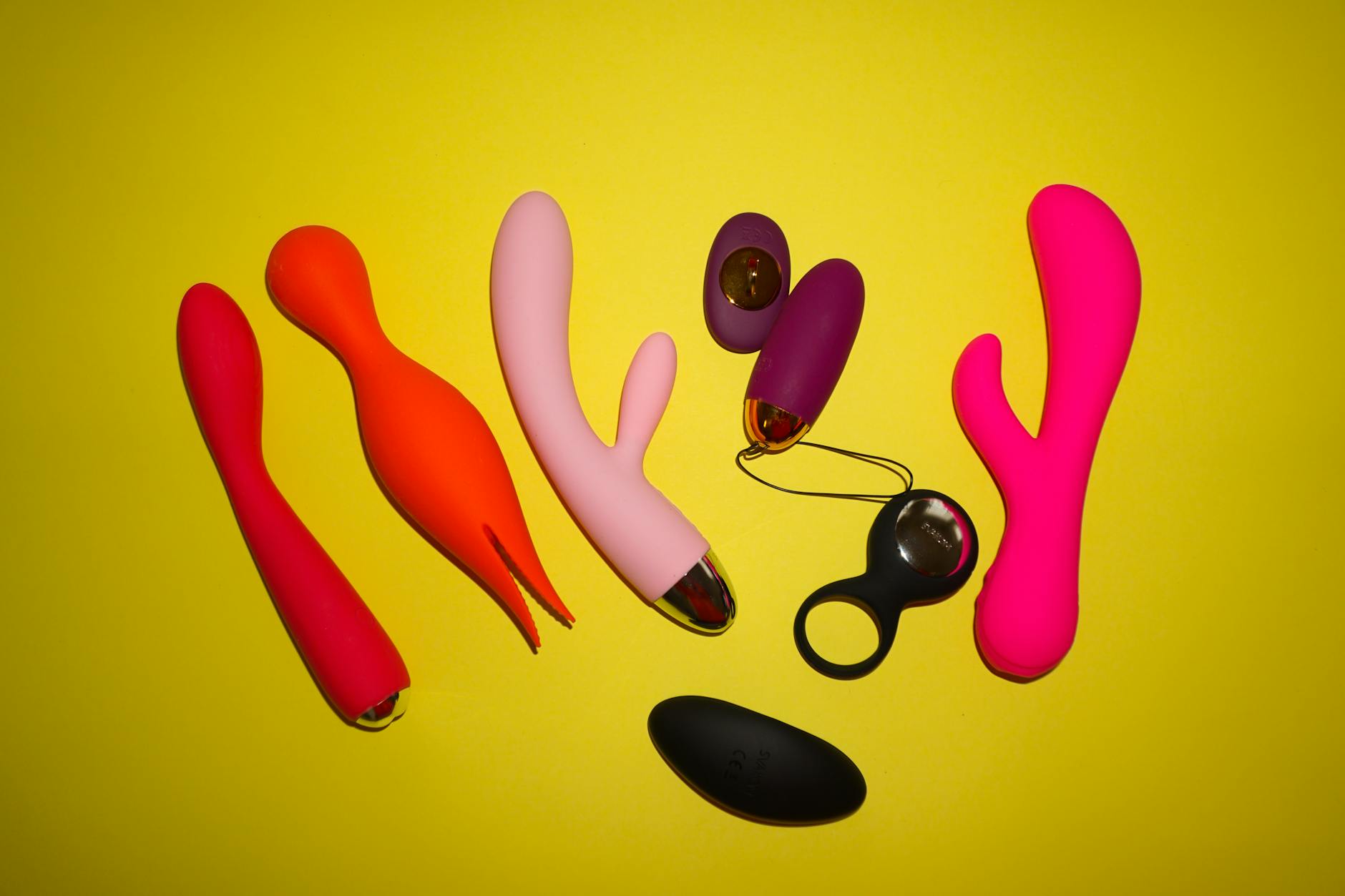
How to Use Lemon Vibrators When You Can't Orgasm With a Partner Present
Performance anxiety kills pleasure. Here's how clitoral vibrators help you reclaim orgasms when someone else is watching, from solo practice to partnered exploration.
You can orgasm alone. Reliably, intensely, without thinking about it. But the moment your partner is in the room, your body goes quiet. Your mind gets loud. Nothing happens, and the silence becomes its own kind of pressure. This is not a flaw in you. It's what happens when the threat detection system in your nervous system decides that being watched means being judged.
Performance anxiety during sex is one of the most common reasons people can't orgasm with a partner present. It's also one of the most treatable. And clitoral vibrators, especially ones that work quickly and reliably, are one of the best tools for reversing it.
There's a neurological reason this happens. Arousal requires parasympathetic activation. That's the rest-and-digest nervous system. Performance anxiety triggers the sympathetic nervous system, the fight-or-flight response. You literally cannot be relaxed and alert at the same time. Your brain picks alert, and your body goes into holding mode.
Add in decades of messaging about what sex should look like, how fast it should happen, whether your body is the right shape, and whether you're doing it correctly, and you get a shutdown response that feels automatic. It is not. It's learned. And learned patterns can be unlearned.
Before you bring a partner into the equation, you need to rebuild your own baseline. That means solo exploration with a lemon vibrator, which is what I recommend to almost every client who's dealing with this.
Start with your vibrator and a comfortable space where you know you won't be interrupted. Set a timer for 20 minutes. The goal is not to orgasm. The goal is to practice pleasure without an audience. This distinction matters because it takes the pressure off. You're not performing for anyone, including yourself.
Use a lemon clitoral vibrator on settings 1 through 3 first. Let yourself notice what feels good without rushing toward a goal. Many people find that the suction sensation of a lemon vibrator is less intense than direct vibration, which makes it easier to stay present when you're already anxious. The gentle pressure gives your nervous system permission to relax.
Do this five to seven times before you involve your partner.
Before your partner is ever present during masturbation or sexual activity, tell them exactly what's happening. "When you're watching, I go into my head. My body doesn't respond the way it does alone. This isn't about you or about not wanting you here. It's about performance anxiety, and we're going to work through it together."
A good partner will hear this as useful information, not rejection. What you're telling them is that this is a solvable problem and that you want to solve it with them. That's different from "I can't come when you're here," which sounds like an accusation.
Then agree on what support looks like. For some couples, that means the partner stays fully clothed and in the room but doesn't touch or make eye contact. For others, it means being present but reading a book. Some people need their partner to narrate what they're seeing. "I'm watching you breathe. Your thighs are relaxing. You look beautiful." That external narration can help override the internal critical voice.
Start with your partner in the room while you use your lemon vibrator, but with no expectation of penetration or partnered touch. You're practicing the skill of being aroused while being watched.
Begin with yourself fully clothed or in underwear. Use your vibrator on your own, with your partner next to you. This removes the element of genital exposure, which often carries extra shame and vulnerability. Many people find this step easier than they expect because the vibrator does the physical work while you practice the mental work of staying present.
Do this three to five times before moving to the next step. You're rewiring the association between "being watched" and "shutting down."
Once that feels manageable, add partial undressing. Then full exposure. Each step should feel incremental, not sudden. Your nervous system learns through repetition that being watched is safe.
Eventually, you'll want your partner to touch you while you use your lemon vibrator. This is where many couples get stuck because they assume the partner should do what the vibrator does. They don't. Different touch serves different purposes.
Your partner can hold you, kiss your neck, or stimulate other areas while you handle the clitoral vibrator. This division of labor means you're not responsible for managing both your own pleasure and your partner's participation. The vibrator is your job. Everything else is theirs.
Some people need their partner to stay still. Some need movement and sound. Some need their partner to not look directly at their genitals. Ask. Every time. "If I come, do you want me to be quiet or vocal?" "Do you want to stay connected with eye contact or would you rather I close my eyes?" These seem like small details until they're the difference between relaxing and freezing.
Why lemon vibrators specifically? Because they work differently than traditional vibrators. A lemon clitoral vibrator uses air-pulse suction rather than direct vibration, which many people find less overwhelming when they're already in a heightened state. That reduced intensity can be the difference between staying present and dissociating.
The suction sensation also tends to build arousal more gradually, which gives your nervous system time to adjust to being in an aroused state around another person. Traditional vibrators often create a sharp, intense sensation that can push an already-anxious body into shutdown mode.
Freeze response is real. You're not rejecting your partner. Your nervous system has decided that staying still is safer than moving. The moment this happens, pause. Don't keep going. Don't try to push through it. That teaches your body that freezing doesn't work, so it escalates to a shutdown.
Instead, take a breath. Tell your partner you need to pause. Use your vibrator on your own for a moment while they hold you or simply stay present. This reminds your body that you're safe and that slowing down is an option.
Many people find that a few moments of solo vibration in the presence of their partner is enough to reset the nervous system. Then you can continue, or you can stop. The goal is not to orgasm every time. The goal is to practice staying present.
This is not a two-week fix. Most people need four to eight weeks of consistent practice to shift an orgasm response that's been shaped by years of anxiety. Some take longer. That's not failure. That's normal nervous system retraining.
The couples I work with who move fastest are the ones who separate the goal from the journey. They're not trying to orgasm by week six. They're practicing being present in their own pleasure. Orgasms often follow as a side effect, not as the main event.
If you're working through this on your own and not seeing movement after two months, or if the anxiety is connected to past trauma around sex or intimacy, a therapist who specializes in sex and relationships can make a real difference. This isn't a sign that something is wrong with you. It's a sign that you deserve support from someone trained in this specific area.
Your pleasure matters. It matters enough to take time with. It matters enough to ask for what you need. And it matters enough to use the tools that actually work, like lemon vibrators, that meet your body where it is.
Your nervous system treats "alone" and "watched" as different safety states. When you're alone, your threat detection system is quiet. When someone else is present, especially someone you care about, your brain activates the social evaluation circuitry. That splits your attention between your own pleasure and how you're being perceived. Your parasympathetic nervous system, which controls arousal, needs single-pointed focus. The moment your attention divides, arousal stalls. This is neurological, not psychological failure.
No. This is a widespread myth with zero evidence behind it. Your nervous system doesn't forget how to respond to different types of stimulation. If anything, the opposite is true. Using a lemon vibrator to practice staying present around your partner actually rewires your arousal response in general. You're not desensitizing yourself. You're teaching your body that pleasure is safe, even when watched. That skill transfers.
That's their anxiety, not yours. A vibrator is a tool, not a replacement. Many partners find it freeing because it removes the pressure for them to be solely responsible for your pleasure. If your partner is struggling with this, it might be worth having a bigger conversation about what intimacy means to you both. A therapist can help with that too. Your pleasure is not a referendum on your relationship.
Yes. In fact, lemon vibrators work particularly well for people on SSRIs or other medications that can blunt sensation, because the air-pulse mechanism stimulates nerves differently than traditional vibration. However, if you're on medications that affect arousal or desire, it's worth having a conversation with your doctor about whether dosage timing or medication type might be adjusted. That's a separate conversation from learning to stay present with a partner.
Performance anxiety feels like your mind and body disconnecting when you're with them specifically. You can arousal-check yourself by noticing whether you get aroused watching them, thinking about them, or in the moments before they enter the room. If yes, it's performance anxiety. If no, there might be a mismatch in attraction or safety that needs a different kind of conversation. Both are workable. Both benefit from honesty.
Absolutely. Somewhere between 30 and 40 percent of people with vulvas need clitoral stimulation to orgasm during partnered sex, regardless of anxiety. That's anatomy, not dysfunction. Adding a lemon vibrator to partnered sex is not a workaround. It's just sex that actually works for your body. The fact that it also helps rewire performance anxiety is a bonus.
Performance anxiety is one of the most treatable sexual concerns out there. It responds beautifully to graduated exposure, the right tools, and a partner who understands what's actually happening. A lemon vibrator isn't a band-aid. It's a bridge from shutdown to presence. Once your nervous system learns that being watched is safe, your whole sexual response shifts.
Your pleasure matters. Start with solo practice, move at your own pace, and let a lemon vibrator do what it does best: remove the pressure so your body can actually relax.