Let's start with the real part
If you've been away from sex for months, years, or even longer, you're not broken. Your body isn't rusty. You're just untouched, which is different. And the gap between "I haven't done this in a while" and "I'm ready to start again" can feel enormous, thick with uncertainty, maybe even dread.
That's where lemon vibrators come in. They're not a fix for the emotional weight of returning. But they are a practical bridge from abstinence back to pleasure, and that matters more than you might think.
Why the gap feels bigger than it is
Abstinence changes your relationship to your own body. Not physically. Psychologically. If you've been away for long enough, your body becomes less like home and more like a place you used to know.
Two things happen when you try to jump straight back in: (1) Your nervous system doesn't have recent practice relaxing in that context, so arousal feels slow or blocked. (2) Your mind floods with doubt. "Will this feel good?" "Will I be able to come?" "What if something's wrong?" That spiral is exhausting, and it usually kills whatever sensation you had.
A lemon clitoral vibrator short-circuits the doubt by giving your body something immediate and straightforward to respond to. You're not relying on your mind to generate arousal. The stimulation is there, consistent, and you can focus on what you actually feel instead of what you think you should feel.
The solo practice phase
If you haven't had sex in a long time, I recommend starting alone. This sounds obvious, but most people skip it and jump to partnered sex, which feels riskier and more fraught.
Alone, you have permission to be slow. You have permission to stop. You have permission to feel whatever you feel without explaining it to someone else.
Start by using your lemon vibrator in a quiet, comfortable space where you won't be interrupted. No performance pressure. No timeline. Set a realistic expectation: you're not here to orgasm. You're here to reconnect with sensation.
Use a low intensity setting first. Something you can almost ignore if you want to. Move it around slowly, paying attention to what feels good. Your clitoris might be more sensitive than you remember, or less. Both are normal. Let your body surprise you.
What to expect physically
After long abstinence, several things shift. Blood flow to the pelvic region decreases. Lubrication patterns change. Nerve sensitivity might feel muted. Your clitoris might feel numb to some types of touch, or hypersensitive to others.
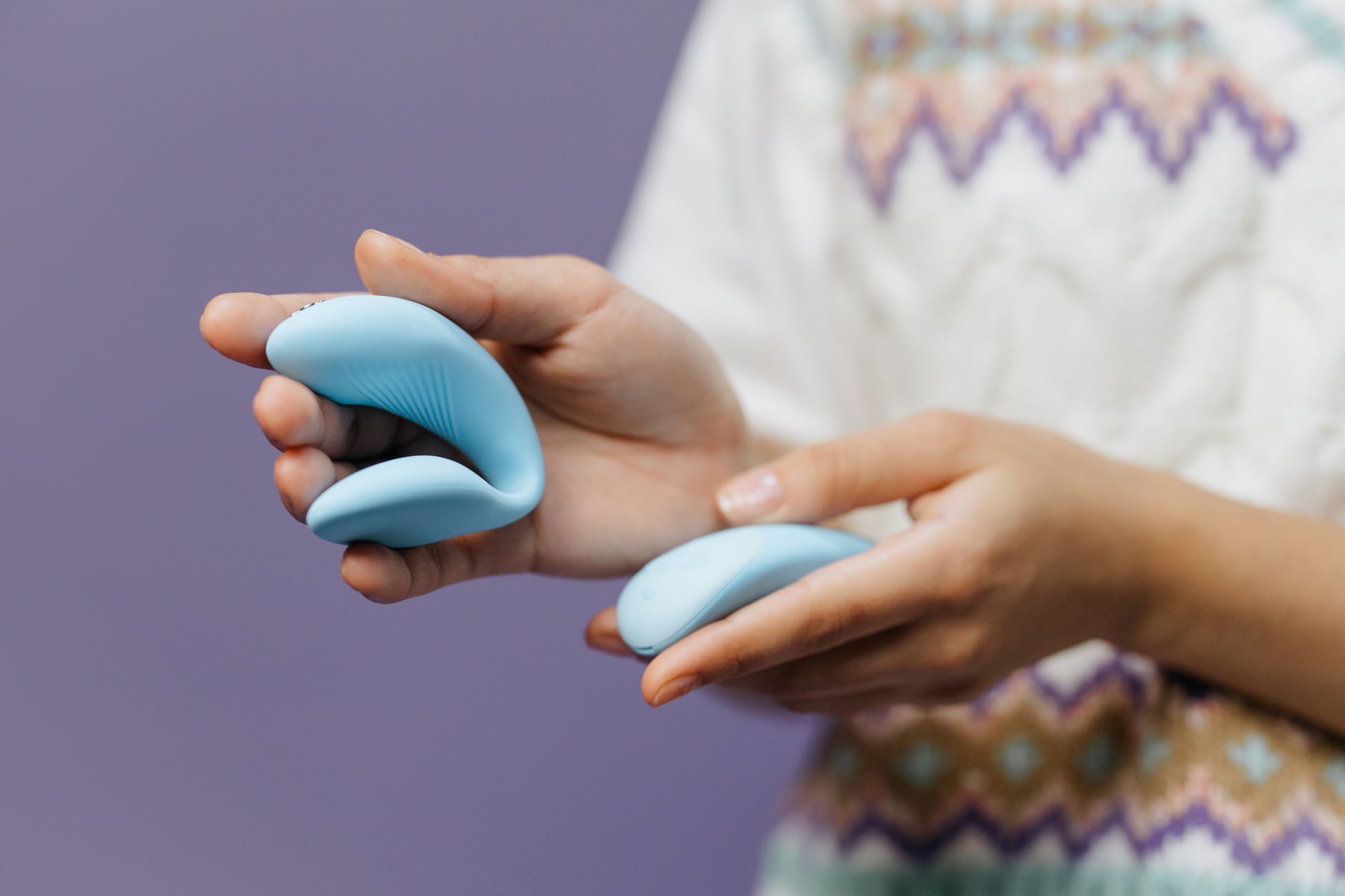
The Lem vibrator is useful here specifically because its suction-based stimulation doesn't rely on direct friction. Instead, it uses gentle pressure and pulsing to engage nerve endings without overwhelming tissue that's been dormant. You're not forcing sensation. You're inviting it.
Many people returning to sex after long breaks report that their first orgasms feel different. Slower to build. Sometimes shallower. Sometimes more intense than remembered. This is not a sign something went wrong. It's your nervous system waking up.
Building the mental piece alongside the physical
Here's what most advice on this topic misses: the physical part is actually the easier half. The mental part is the work.
When you've been away from sex, shame often settles in. Shame about the gap itself. Shame about your body changing. Shame about wanting to start again. Shame about not wanting to. Lemon vibrators can't touch that shame, but recognizing it matters.
Before you bring a partner in, ask yourself: am I doing this because I want to, or because I think I should? There's a difference. If you're returning to sex because you genuinely want connection and pleasure again, that energy is different than forcing it because you feel you've waited long enough.
Use solo time with your vibrator as a conversation with yourself. What do you actually want? How fast? With what kind of partner? These questions matter, and they're quieter when someone else is in the room.
When you're ready to bring a partner in
Timing is everything here. You're not ready for partnered sex when you've had one good orgasm alone. You're ready when you've rebuilt a little trust with your own pleasure.
Then, when you bring a partner into the picture, be direct about what you've learned. "I like this intensity." "I need more time to warm up." "I want to use the vibrator, and here's how." This isn't complicated, but it does require you to speak.
If your partner has anxiety about the vibrator, that's separate from your journey. You can acknowledge it and move forward anyway. Read more about how to introduce lemon vibrators to a partner who thinks toys kill intimacy if that's your dynamic.
Start slow with a partner too. Use the vibrator together in a low-pressure context. Maybe it's just foreplay. Maybe it's just you using it while they're present. The point is to normalize it gradually.
The timeline is not linear
You'll have nights where sensation feels abundant and nights where it feels locked behind glass. Both are normal returns to sex after abstinence. Your body is rebuilding a habit and a neural pathway. That takes time.
Most people report that by week 4 or 5 of regular solo practice, things start to feel easier. By 8-12 weeks, the psychological weight usually lifts noticeably. But everyone's timeline is different, and pushing it usually makes it longer, not shorter.
If after 12 weeks of consistent practice you still feel completely numb or disconnected, that's worth talking to a doctor about. Sometimes hormonal shifts, medications, or health changes affect sensation in ways a vibrator can't address. That's not failure. That's useful information.
What makes lemon vibrators specifically good for this transition
Lemon clitoral vibrators work well for people returning to sex for a few reasons. First, they're discreet and intuitive. There's no steep learning curve. Second, the suction-based technology provides sensation without the intensity of traditional vibration, which can feel overwhelming if you've been away for a long time. Third, they're reliable. You know what you're going to get every time, which reduces anxiety.
If you're starting from scratch, the gentle patterns on a lem vibrator let you build tolerance slowly. You're not jumping to maximum intensity on day one.
Common roadblocks and how to move past them
You feel nothing, so you assume something is broken. Try this instead: lower your expectations for what orgasm should feel like. After abstinence, the first orgasms are often quieter. That's not failure. That's calibration.
Your partner asks why you need a vibrator if you want to reconnect with them. This is not about them. This is about you rebuilding your relationship with your own pleasure. Those are two separate conversations, and conflating them usually stalls both.
You feel guilty for wanting pleasure again. That's a bigger conversation than this article can hold, but know that desire returning is a sign you're healing. Guilt is just a story your nervous system tells when it's uncertain. Keep going.
The quiet win
Returning to sex after long abstinence is not supposed to feel dramatic. It's supposed to feel gradual, manageable, and increasingly pleasurable. A lemon vibrator doesn't make that happen by itself, but it removes the biggest friction point: the gap between intention and sensation.
You're not starting over. You're starting again, which is different. And with patience, practice, and the right tool, that can feel genuinely good.
People also ask
How long does it usually take to feel pleasure again after years of abstinence?
Most people report noticeable improvement in sensation and comfort within 4-8 weeks of regular solo practice. By 12 weeks, psychological barriers usually soften significantly. But this is not a universal timeline. Hormonal changes, medications, stress, and relationship dynamics all affect the pace. The point is to commit to regular practice without a hard deadline. Your body will tell you when it's ready.
Is it normal to feel nothing the first few times I use a lemon vibrator after being away from sex?
Completely normal. After long abstinence, nerve sensitivity takes time to wake up. Your body might need a few sessions to recognize the stimulation as pleasurable rather than just sensation. Some people feel something immediately. Others need 3-5 sessions before pleasure registers. Both are fine. Don't panic and don't push harder. Low intensity, patience, and repetition is the formula.
Should I tell my partner I'm using a vibrator to prepare for sex together?
Yes, if you plan to have sex with them. Not because you need permission, but because transparency builds trust. You might say something like: "I want to make sure I'm ready for us physically and emotionally. I'm using a vibrator to get there." Most secure partners will appreciate the honesty. If your partner has anxiety about vibrators, that's a separate conversation worth having before you try partnered sex.
What if I'm returning to sex after abstinence but have a sensitive body or pain issues?
Start with the lowest intensity setting and the shortest sessions. 5-10 minutes is enough. If pain shows up, stop and rest for a few days. If pain persists, check with a doctor. Some people benefit from a water-based lubricant even when using a suction vibrator like the Lem. Others don't need it. You'll figure out your body's needs by paying attention, not by pushing.
Can I use a lemon vibrator if I'm returning to sex after a long relationship ended?
Absolutely. Breakup abstinence is different from other kinds, because grief and loss are usually involved. A lemon vibrator can help you reclaim your body as yours again. Solo practice with a vibrator is actually a valuable part of healing and rebuilding self-directed pleasure. It's not a replacement for grief processing, but it is a way of saying to yourself: "My pleasure matters. I'm worth touching."
Is there a "best" lemon vibrator for someone returning to sex after a long break?
The Lem is a solid choice because its suction design is gentler than traditional vibration, which helps if your body is sensitive or you're rebuilding sensation. Start on the lowest intensity and work up. Many people find they prefer lower settings for months after returning, and that's fine. You're not racing to maximum intensity. You're finding what feels good, which might be surprising and different from what felt good before.
If you're ready to move from theory to practice, contact us with any questions about which lemon vibrators work best for your specific situation. We're here to help you navigate this transition with confidence.