
How to Use Lemon Vibrators With a New Partner After a Long Break
Honestly? You're navigating two conversations at once, and most people try to cram them into one. That's where things get weird.
You've been away from sex for a while. Maybe it was years. Maybe it was months. Either way, your nervous system has adjusted to that baseline, and now you're restarting with someone new. Adding toys to that already-vulnerable moment can feel like you're stacking difficulty on top of difficulty. But it doesn't have to be. The trick is separating the two stories: "I'm coming back to sex" and "I want to use toys." Let's untangle both.
Why these two things feel tangled up
When you've been away from sex for a long time, your body and brain need reconnection work. That takes patience, gentle exploration, and a lot of trust. When you're starting with a new partner, there's already uncertainty. You don't yet know how they react to vulnerability, how they handle feedback, or what they're secretly worried about. Adding a toy to that equation can feel like you're introducing a variable you can't control.
Here's what actually happens: you start thinking the toy is the problem. You worry it means you're "too demanding" or that your new partner will think you don't find them attractive. None of that is usually true. What's true is that you're timing the conversation poorly.

Photo by Ihsan Adityawarman on Pexels
The first conversation: rebuilding your own baseline
Before toys enter the chat, you and your partner need a few solid experiences together. I usually tell clients to aim for at least 3-5 sexual encounters before introducing anything external. This gives you space to notice what works, what doesn't, and where your body's actually at after time away.
During this phase, focus on sensation without expectation. Your body might surprise you. After months or years without sex, arousal might come faster than you remember, or it might come slower. Orgasm might feel different. Pain might show up unexpectedly. None of this is permanent or broken. It's your nervous system recalibrating.
Talk to your partner about what you're noticing. Not in a clinical way, but honestly. "I'm noticing my body takes a little longer to warm up than I remember" is a normal thing to say. So is "That felt really good, can we do that again?" These small conversations build trust for the bigger one coming.
When to bring up toys (and how)
The magic moment is when you've had a few good experiences and you're both relaxing into each other. Not during sex. Not right after. Pick a normal moment, clothed, low-stakes. Maybe you're in bed talking in the morning, or on the couch. Somewhere you can actually look at each other.
Start by naming what's true: "I've been away from sex for a while, and I'm really enjoying rediscovering my body with you. I've also been thinking about using a toy sometimes, and I wanted to talk to you about it." That's it. You've separated the two stories. You've clarified that you're enjoying them, and that toys are a separate thing you're considering.
Give them space to react. They might say yes immediately. They might have questions. They might feel a little defensive or insecure. All of that is normal. The worst thing you can do at this point is rush to reassure them or over-explain. Just say: "What are you thinking?"
The conversation that usually needs to happen next
If your partner seems hesitant, the issue is almost never actually about the toy. It's about one of three things:
1. They're worried it means you're not satisfied with them. Address this directly: "I'm really satisfied with you. Toys aren't about replacing you. They're about adding something different sometimes." That's the honest version.
2. They're worried it means something is wrong with you. This one hits harder when you're already nervous about returning to sex after time away. You might hear "Is there something wrong with your body?" or "Why do you need that?" The answer is: "My body just responds well to this. It doesn't mean anything is wrong." Full stop.
3. They're worried about what it says about them. "If you need a toy, maybe I'm not enough." This is about their insecurity, not about you. You can't fix this by not using toys. You can only fix it by being patient while they adjust to the idea that their hands and a clitoral vibrator are not the same thing and were never meant to be.
If your partner is hesitant, you have a choice: you can wait longer, or you can decide that this isn't the right fit for you. Both are valid. But what you shouldn't do is sneak a toy in later, or use one in secret, or frame it as something you're "allowing yourself" to do. That builds resentment and disconnection.
How to actually introduce it the first time
Once you both agree, don't make it a production. You're not performing. You're just expanding your toolkit.
Pick a time when you're both relaxed and you have privacy. Not the first time you're trying it. Maybe it's the second or third time after you've talked about it. Let your partner watch you use it on yourself first, if they're open to that. This takes away the weirdness and shows them what it actually does.
Lemon clitoral vibrators like the Lem work well for this moment because they're intuitive. You don't need instructions. You just use it. There's no complicated learning curve. Start on a lower setting. You know your body. Let the toy do the work.
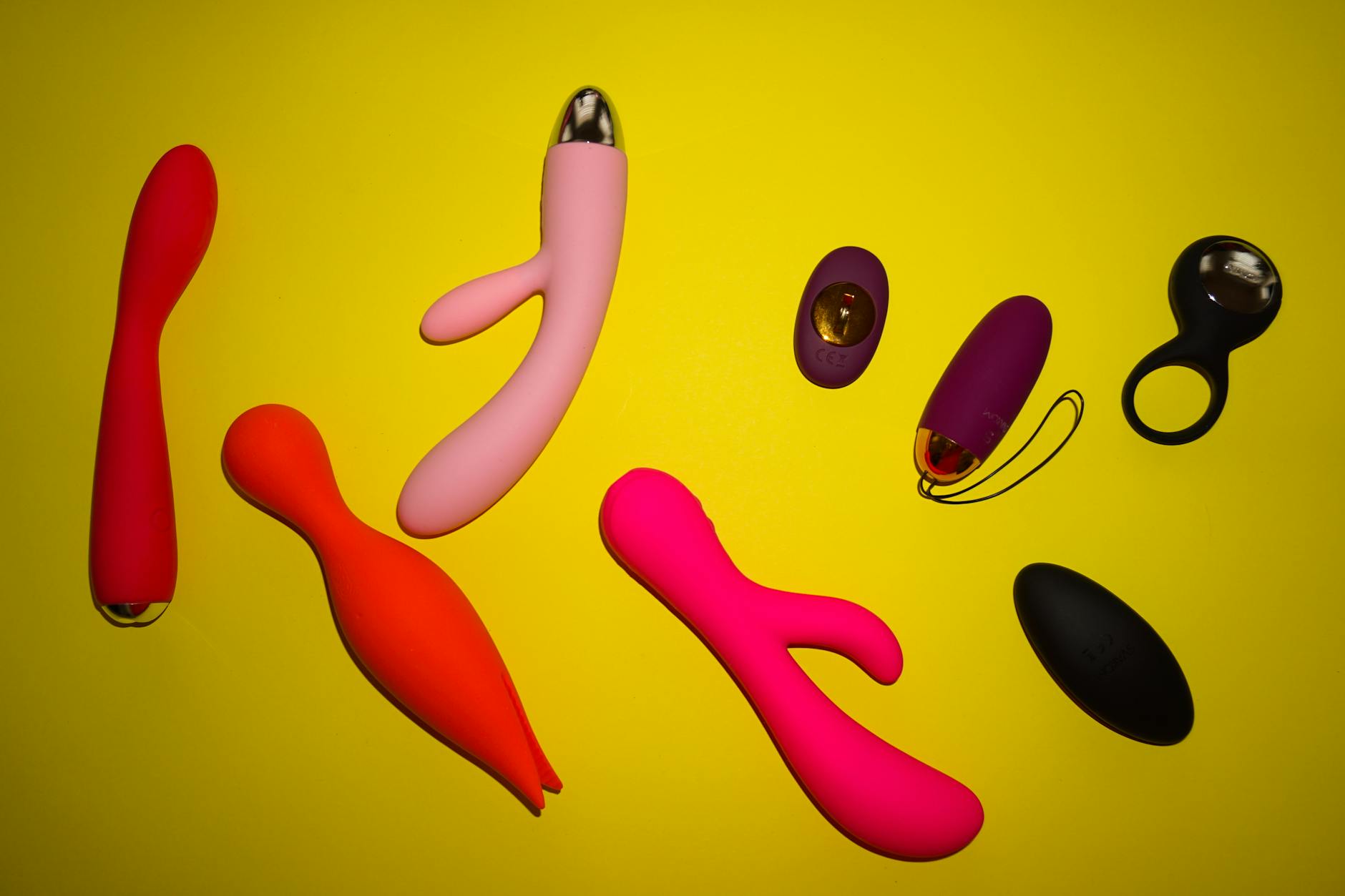
Photo by FounderTips on Pexels
If your partner wants to be involved, they can be. They can hold it. They can take over. Or they can just be there. None of those makes them less of a partner. The toy is a tool. It's not replacing them. It's just changing the angle of what's possible.
Troubleshooting the awkward moments that show up
Sometimes even after you've had this conversation, the moment feels uncomfortable. Your partner seems quiet. You feel self-conscious. Here's what's probably happening: you're both overthinking it.
If your partner goes quiet, check in. "Does this feel weird for you?" Sometimes it does. Sometimes they need to adjust to the visual or the sound. Sometimes they need to understand that watching you feel good is actually a turn-on for them. Give it time.
If you're feeling self-conscious, that's worth naming too. "I'm a little nervous about this" is honest and human. It doesn't need to derail the moment. It just needs to be said.
What you're doing right now is building a partnership around pleasure. That's harder than just having sex, but it's so much more connected. You're saying: "This is what my body likes. I trust you enough to show you. I'm curious about what happens next."
When to go slow on the toy talk
If you're returning to sex after long abstinence, give yourself at least a few weeks before introducing toys. Your nervous system is already adjusting. That's enough. Don't add complexity until you're actually ready.
If your partner has expressed any significant hesitation, don't push. You can revisit the conversation in a month or two. People's minds change when they feel safe, not when they feel pressured.
If you're experiencing pain, numbness, or difficulty with arousal after time away, that's a conversation for a healthcare provider before it's a conversation for toys. Tools can help, but they're not a substitute for addressing what's actually going on in your body.
The long game
Using a lemon vibrator with a new partner after time away isn't really about the toy. It's about saying: "I'm worth good pleasure. I'm worth asking for what I need. And I trust you enough to be honest about it."
That's the hardest part. The toy is easy. The vulnerability is the work.
Once you've established that you can talk about toys without shame, everything else gets easier. Want to introduce something new? You already know how. Want to ask for something different? You've already practiced. You've built a language together around pleasure that isn't loaded with guilt or performance pressure.
That's the real win.
FAQ
How long should I wait after returning to sex before using a toy with my partner?
Wait until you've had at least 3-5 good sexual experiences together. This gives you time to rebuild your baseline and understand how your body responds. It also gives you and your partner time to build trust around vulnerability before adding something new to the mix.
What if my partner thinks toys mean there's something wrong with my body?
This is a common insecurity, especially when you're already vulnerable about returning to sex. Address it clearly: "My body just responds well to this kind of stimulation. It doesn't mean anything is wrong." You can also explain that clitoral vibrators and partner touch are different stimuli. One isn't better or worse; they're just different. If they're still stuck on this, they might benefit from reading about how bodies actually work. But that's their work, not yours.
Should I use a toy alone first before trying it with my partner?
Yes, ideally. Get familiar with how it feels, what settings work for you, and what the experience is like on your terms. Then you can show your partner with confidence, which actually makes the moment less awkward, not more.
What if we try it and it's weird?
It might be weird. That's okay. Weird doesn't mean wrong. Sometimes it just means you both need to adjust to the new thing. Check in with your partner. Notice what made it weird. Maybe it's the sound, or the visual, or the timing. Sometimes a second try feels totally different from the first. And sometimes you just decide toys aren't for you two, and that's fine too. The point is talking about it.
Is it better to ask for permission or just tell my partner I want to use a toy?
Tell them, but do it as a conversation, not a unilateral decision. "I've been thinking about using a toy sometimes" gives them space to respond, ask questions, and be part of the choice. It's collaborative, which matters when you're rebuilding intimacy after time away.
How do I know if my partner is only saying yes because they feel pressured?
You'll see it. Their energy will be cautious or quiet. They might agree with their words but their body language says no. If you notice that, pause. Say: "We don't have to do this today." Real consent is enthusiastic, or at least genuinely curious. If it's reluctant, it's not ready yet. That's information. Use it.
Starting sex again with someone new is already brave. You're reintroducing yourself to your own body and trusting someone else at the same time. That's a lot. Adding tools to that process doesn't make it harder if you do it with honesty and patience. It just makes it more possible to get what you actually need.
Ready to have the conversation? The hardest part is the first sentence. After that, it usually flows. If you're stuck, our team at Nancy's Lems Shop is here to help. Reach out anytime.